






Assistant icon
Can I help you? What type of test are you looking for?

Luke SIGMUND Consultant

×
Assistant avatar
Can I help you? What type of test are you looking for?
Soft skills & psychométrie : équipe RH analysant des résultats de tests psychométriques
Complete Guide 2026

Soft Skills & Psychometrics: The HR Leader's Guide to Hiring Right

Validated Tests  ·  Big Five  ·  DISC  ·  Emotional Intelligence  ·  GDPR

89 % of success = soft skills
−40 % employee turnover
+35 % ROI in 18 months
10 expert guides

92% of recruiters consider soft skills as critical as technical skills. Less than 15% have an objective method to measure them. This guide bridges that gap.

Choose the right psychometric tests
Eliminate hiring bias
Calculate the ROI of your assessments
Identify tomorrow's leaders
Stay GDPR compliant
Reduce turnover by 25 to 40%

10 Guides for HR Managers and Recruiters

Everything an HR Manager Needs to Know About Psychometric Tests

Structured resources: validated methods, ROI case studies, legal compliance, and job profiles. Each article delves into a specific area to help you recruit better—and prove it.

Big Five & DISC Emotional Intelligence ROI & Case Studies Managers & Sales GDPR & Compliance Vendor Comparison


Master soft skills assessment for recruitment. Learn to use psychometric tools to objectively evaluate emotional intelligence, cognitive ability, and behavioral traits to hire top talent in the USA/UK.

Is your recruitment process still relying on gut feeling? That's an expensive gamble.

Guide to effective recruitment focusing on soft skills assessment.

Why Soft Skills Assessment is Your Decisive Competitive Edge

The resume shines. The interview is brilliant. Six months later, it's a crisis. The problem wasn't technical skills. It was the soft skills. Your biggest hiring mistake? Choosing a technical genius who sabotages the team.

Competencies like collaboration and adaptability are now the primary success factor. Why? Because AI handles technical tasks. What remains is human: the ability to work together, adapt, and communicate. Ignore this, and you navigate blind.

Key point: 89% of your professional success comes from soft skills, not your diploma. You cannot manage what you do not measure. Soft skills are no longer an impression. They are data.

The Modern Recruitment Paradox

Recruiters know this. 92% declare soft skills are as important as hard skills. Yet fewer than 15% use objective methods to evaluate them. The result is costly hiring failures.

The market confirms the shift. The psychometric testing market already weighs $3.2 billion. This guide is your compass. It transforms feeling into data. It makes the intangible, measurable.

The Tangible ROI of Evaluating Soft Skills

This isn't about philosophy. It's about performance and profit. Subjective hiring is a financial leak. Objective assessment is an investment with a clear return.

Organizations using validated soft skills assessments report significant gains. They see up to a 25% increase in retention. They experience a 30% boost in productivity from better cultural fits.

"Companies that invest in structured assessment methods see a 35% lower turnover rate among new hires within the first year."

Cutting Through Subjectivity with Data

Gut feeling is biased. Data is objective. A structured soft skills assessment provides quantifiable metrics. It replaces opinion with a score you can compare.

This objectivity reduces hiring errors. It minimizes the risk of a bad cultural fit. The cost of a bad hire is 30% of that employee's annual salary. Data protects your budget.

Identifying Hidden Potential Early

Traditional interviews favor the charismatic. Assessments reveal the resilient, the adaptable, the quietly brilliant. You spot high-potential talent others miss.

This is crucial for leadership pipelines. Assessing for leadership potential and emotional intelligence early saves massive development costs later.

What Exactly Are You Measuring? Core Soft Skills Defined

Not all soft skills are equal for every role. You must define what excellence looks like for the specific job. Here is a breakdown of the most critical competencies.

  • Adaptability: The ability to learn quickly and pivot in volatile environments. 80% of fast-evolving organizations cite this as their key skill.
  • Emotional Intelligence: Self-awareness, empathy, and emotion regulation. This is the foundation of teamwork and leadership.
  • Critical Thinking: Analyzing problems objectively and making data-driven decisions. It prevents groupthink.
  • Communication: Active listening and clear articulation. Poor communication causes 86% of workplace failures.
  • Resilience: Perseverance through stress and rejection. It determines long-term stamina.

The Leadership Imperative

For managerial roles, the mix changes. Strategic vision, inspirational motivation, and conflict resolution become paramount. You are assessing for future impact, not just task completion.

The Psychometric Toolkit: Your Assessment Arsenal

How do you measure these traits? You use scientifically validated tools. This is not a personality quiz from a magazine. It is applied psychology.

Personality Inventories

These map enduring behavioral tendencies. The Big Five model (OCEAN) is the gold standard for scientific validity. Tools like Hogan or Thomas PPA translate this into work-related insights.

They answer: How will this person likely behave under pressure? How do they interact with others?

Cognitive Ability Tests

These assess problem-solving speed, logical reasoning, and learning agility. Tests like the CCAT or Wonderlic predict job performance across many roles. They are a strong indicator of trainability.

Emotional Intelligence (EI) Assessments

EI is a learnable skill set. Tools like the EQ-i 2.0 provide a score across self-perception, self-expression, and interpersonal domains. High EI correlates with better team performance and retention.

Attention: Always use assessments validated for your specific context and country. A tool normed on a UK population may not be directly valid in the US, and vice-versa.

A 5-Step Action Plan to Integrate Assessments

Knowing is not enough. You must operationalize this. Here is a clear, actionable checklist to start transforming your hiring process.

  1. Define the Profile: For each key role, list the 3-5 non-negotiable soft skills. Use top performers as your benchmark.
  2. Select Your Tools: Choose validated, reliable assessments. Prioritize user experience. A 20-minute mobile-friendly test gets better completion rates.
  3. Administer Early: Use assessments post-CV screening, before deep interviews. This saves everyone's time.
  4. Integrate with Interviews: Use assessment results to structure behavioral interview questions. Probe the data points.
  5. Track and Calibrate: Link assessment scores to 6-month performance reviews. Refine your ideal profile based on real success data.

Start with Your Own Leadership: The SIGMUND Manager Test

The most impactful place to begin is with your leadership. Managers account for 70% of variance in team engagement. Evaluating their soft skills has a cascading positive effect.

The SIGMUND Manager Test is designed for this. It assesses emotional intelligence, strategic thinking, communication, and resilience specifically for leadership contexts.

A Concrete Leadership Scenario

Consider a VP of Technology leading multinational, hybrid teams. Success depends less on coding expertise and more on bridging cultural gaps, motivating remotely, and managing stress.

A psychometric profile highlighting high emotional intelligence and adaptability predicts success here far better than a technical certification alone. The assessment provides that objective layer of insight.

Ready to move beyond guesswork? Explore our HR assessment solutions to build a data-driven recruitment strategy that delivers measurable ROI.

Assessment Technology Evolution: Beyond the Paper Test

The old model is broken. Imagine a stack of resumes. A gut-feeling interview. A costly hiring mistake six months later. That cycle is expensive. Modern behavioral assessment tools USA companies use are different. They are digital. They are predictive. They turn subjective impressions into objective data points you can act on.

Point cle: The shift isn't just online. It's a fundamental change from measuring what someone knows to predicting how they will behave under real-world pressure.

The Digital Shift: AI, Analytics, and Mobile-First Design

Paper-based questionnaires feel archaic. Today's platforms are dynamic. They adapt. They analyze response patterns, not just answers. Consider the impact: AI predictive analytics hiring models can reduce early-stage turnover by up to 25% (Aon, 2023). How? By identifying behavioral fit from the first click.

  • Mobile-First Assessments: Completion rates jump by 40% when candidates can test on their phone. It meets them where they are.
  • Asynchronous Video Analysis: NLP algorithms evaluate communication clarity, empathy, and poise from recorded responses. No scheduling conflicts.
  • Predictive Dashboards: Data doesn't sit in a report. It lives in a dashboard, benchmarking candidates against your top performers' traits.

Gamified Assessments: The Job Tryout

Forget hypothetical questions. Gamified assessment workplace tools create simulations. A candidate manages a virtual project. They resolve a team conflict scenario. They prioritize a flood of tasks. This measures applied soft skills. It's a mini job tryout.

"Game-based assessments reveal the 'how' behind the 'what.' We see decision-making speed, risk tolerance, and learning agility in real-time."

Platforms like Pymetrics or Arctic Shores use neuroscience games. They measure 80+ cognitive and emotional traits in 25 minutes. The output is a clean fit score, not a confusing personality label.

Soft skills and psychometrics for effective recruitment.

Proven Results: Soft Skills Assessment ROI by Industry

Skepticism is normal. "Does this actually work?" Let the data answer. The return on investment for validated psychometric assessment companies USA UK offer is measurable. It's not a cost center. It's a profit driver. The pattern holds across sectors.

Technology & Professional Services: Productivity Multipliers

In fast-paced tech, a wrong hire cripples a sprint. Google's Project Oxygen famously found the best managers weren't the top engineers. They excelled in leadership assessment 360 degree metrics: coaching, clarity, empowerment. Result? Teams led by these managers scored 20% higher on performance metrics.

  • Deloitte: Implemented structured recruitment tests focusing on adaptability and problem-solving. Saw a 40% increase in project team productivity.
  • BCG: Reported an astronomical 1484% ROI from its leadership assessment program. The cost of a bad partner hire dwarfs the assessment investment.

Finance, Healthcare & Hospitality: The Retention Engine

Turnover is a silent profit killer. In customer-facing roles, emotional intelligence directly impacts revenue. Hilton integrated personality tests for empathy and resilience into their hiring. The result? A 40% drop in early attrition for front-desk roles.

Attention : In healthcare, a clinician's burnout risk can be predicted. Assessments measuring resilience and workplace emotional intelligence testing ROI are now critical. One hospital network saw a 60% lower turnover among nurses flagged as 'high-resilience' during hiring.

The finance sector gets it. JPMorgan's internal study showed teams with high aggregate emotional intelligence scores had 35% higher productivity and 40% better engagement. The link between leadership performance metrics emotional intelligence and profit is direct.

Cross-Sector Insight: The Common Denominator

Different industries. Same conclusion. Investing in objective soft skills measurement yields a 25-40% improvement in key metrics: productivity, retention, engagement. The initial investment in executive assessment ROI statistics and tools pays for itself within the first 12 months by avoiding just one or two mis-hires at the managerial level.

Learn how to objectively evaluate soft skills in recruitment. Discover proven psychometric tools and a step-by-step integration process for USA/UK hiring.

How to Objectively Evaluate Soft Skills in USA/UK Hiring

Key Insight: Subjective interviews guess. Objective assessments measure. The difference is a predictable hire versus a costly gamble.

Do you trust your gut? Your intuition is valuable, but it's incomplete. It's a calculation with missing steps. Psychometric tests restore those missing steps. They transform soft skills assessment workplace from an art into a science.

1. Use Scientifically Validated Psychometrics

Not all tests are equal. Demand proof. A validated test predicts job performance. It measures consistently. Look for reliability coefficients above 0.7. Check for compliance with EEOC (USA) and the Equality Act (UK). Your tool must be legally defensible.

  • Validity: Does it measure what it claims? A sales aptitude test must predict sales success.
  • Reliability: Are results consistent? A candidate should score similarly on two attempts.
  • Norm Groups: Compare results against a relevant professional population, not the general public.

2. Implement Quantifiable Metrics and Scoring

Move beyond "good communicator." Define what that means. Use a 1-5 scoring scale for specific behaviors. For example, "Listens actively without interrupting" or "Structures arguments logically." This creates a common language for your hiring team.

The ROI of this clarity is immense. Companies using structured scoring see a 30% increase in hiring manager satisfaction (Source: SHRM). You are building a dashboard for human potential.

Guide to effective recruitment of soft skills using team emotional intelligence.

3. Leverage Multi-Rater (360°) Assessments

A single perspective is a snapshot. A 360° view is a full portrait. For leadership roles, gather feedback from peers, direct reports, and managers. This method, used in comprehensive HR assessments, reveals how a candidate's emotional intelligence plays out in real relationships.

"The only way to do great work is to love what you do. Understanding how someone interacts with a team is key to that passion." — Adapted from Steve Jobs

Research shows leadership performance metrics emotional intelligence improve by 25% when 360° feedback is part of development. Apply this principle early. During hiring, a simulated 360° via role-play or references can be revealing.

4. Utilize Professional Benchmark Data

How does your candidate compare? Not to your last hire, but to thousands of high-performers in their field. Top psychometric assessment companies USA UK provide these benchmarks. They tell you if a candidate's adaptability score is in the top 10% for project managers.

This is powerful. It removes the guesswork. It answers: "Is this good enough for our standards?" With the right data, you know.

5. Engage Certified Expert Evaluators

Tools are only as good as the interpreter. A certified psychologist or trained assessor understands nuance. They spot inconsistencies. They can differentiate between high self-awareness and a socially desirable response. Their expertise ensures the workplace emotional intelligence testing ROI is fully realized.

Caution: An untrained manager misinterpreting a DISC profile can do more harm than good. Invest in training or partner with experts.


Integrating Soft Skills into Your Recruitment Process

You have the tools. Now, build the machine. A seamless process turns data into hires. Here is the actionable blueprint.

Step 1: Define the Ideal Soft Skills Profile

Forget generic lists. Analyze the specific role. A customer service agent needs high empathy and resilience. A data analyst needs critical thinking and attention to detail. Interview top performers in that role. What makes them successful? Codify that into 3-5 essential soft skills.

Step 2: Select the Right Assessment Tools

Match the tool to the skill. Do not use a personality test for a technical skill. Your mix might include:

  • Cognitive ability tests assessment workplace: For problem-solving and learning agility.
  • Behavioral assessment tools USA: Like situational judgment tests (SJT) for real-world decision-making.
  • Personality tests recruitment USA: Big Five or Hogan for cultural fit and derailers.

Platforms like specialized recruitment tests integrate these tools efficiently.

Step 3: Administer Assessments Early

Save time. Deploy tests after the initial CV screen, before the first interview. This filters for both capability and fit. You then invest interview time only in pre-qualified candidates. Companies report a 50% reduction in time-to-hire with this approach.

Step 4: Integrate Results into Structured Interviews

The report is a conversation guide, not a verdict. If a test shows low assertiveness, probe in the interview. "Describe a time you had to advocate for an unpopular idea." Use the STAR method. This data-informed dialogue is where the real insight happens.

Step 5: Track and Calibrate Post-Hire

The loop must close. Compare assessment scores with 6-month performance reviews. Are your top scorers actually your top performers? If not, recalibrate your profile or tools. This continuous feedback is the engine of ai predictive analytics hiring. It makes your system smarter over time.

Actionable Checklist: 1) Define role-specific skills. 2) Choose 2 validated tools. 3) Test before first interview. 4) Use results to guide interview questions. 5) Review test-performance correlation after 6 months.

How to Objectively Evaluate Soft Skills

You can't manage what you can't measure. Subjective "gut feelings" about a candidate's soft skills lead to inconsistent hiring. Objective evaluation brings precision. It turns intuition into data.

The Role of Scientific Psychometrics

Validated psychometric tools are your foundation. They are built on rigorous science. Two key metrics matter: validity and reliability.

  • Validity Does the test measure what it claims to? A valid emotional intelligence test predicts real-world EI performance.
  • Reliability Does it give consistent results? A reliable test yields similar scores for the same person over time.

Tools like the EQ-i 2.0® or the Hogan Personality Inventory have decades of research behind them. They move you beyond guesswork.

Point cle : Always demand technical manuals from your assessment provider. Look for reliability coefficients above 0.7 and validity studies relevant to your industry.

From Scores to Actionable Metrics

Raw scores are useless without context. You need quantifiable metrics tied to job performance.

  • Scoring Scales Use standardized sten scores (1-10). A score of 7+ indicates high proficiency. Compare candidates directly.
  • KPI Alignment Link assessment results to performance KPIs. Does high "Adaptability" correlate with faster onboarding? Track it.

A comprehensive HR assessment provides clear benchmarks. It shows how a candidate compares to a professional norm group.

"Companies using validated assessments see a 24% increase in hiring manager satisfaction and a 29% reduction in turnover." - Talent Board, 2025 North American Candidate Experience Research.

Multi-Rater Feedback: The 360° View

For management roles, one perspective is never enough. 360-degree evaluations gather feedback from supervisors, peers, and direct reports.

This method is ideal for development and internal promotions. It reveals blind spots in a leader's interpersonal style. It provides a holistic picture of collaboration and communication skills.

Guide to effective recruitment through soft skills assessment.

Attention : 360° feedback is powerful for development. Use it cautiously for high-stakes selection decisions, as personal relationships can bias responses.

Top Soft Skills for USA & UK Hiring Success

Not all soft skills are equal for every role. Focus on the competencies that drive success in your specific context. Here are the non-negotiables for 2024.

1. Adaptability & Learning Agility

The pace of change is relentless. Can your new hire pivot? Adaptability means quickly learning new processes, tools, and strategies. It's the number one skill for future-proofing your team.

Test for it with situational judgment tests (SJTs). Present a scenario of sudden market change. Evaluate the candidate's proposed solution for flexibility and practicality.

2. Critical Thinking & Problem Solving

This is about analysis, not just intuition. A critical thinker identifies the root cause of a problem. They use data to inform their decisions, not just emotion.

Cognitive ability tests like the CCAT measure this precisely. They assess verbal, numerical, and abstract reasoning under time pressure.

3. Communication & Active Listening

Clear articulation is only half the equation. Active listening—fully comprehending and engaging with others—is the other. Miscommunication costs US businesses an estimated $1.2 trillion annually, according to a 2024 Holmes Report.

4. Collaboration & Teamwork

Hybrid work makes intentional collaboration harder. It requires empathy, conflict resolution, and shared goal orientation. Use gamified team assessments to observe these dynamics in a simulated environment.

5. Emotional Intelligence (EI)

High EI means self-awareness, self-regulation, empathy, and social skills. Leaders with high EI drive 20% higher team performance (Gallup, 2025). An EI-focused personality test is essential for leadership and client-facing roles.

Point cle : Prioritize. A software developer needs strong critical thinking. A customer success manager needs top-tier communication and EI. Match the skill mix to the job.

ROI of Soft Skills Assessments in USA/UK

Point cle : Viewing assessments as a cost center is a mistake. They are a measurable investment with a clear return.

What is the real price of a bad hire? It's not just salary. Factor in lost productivity, team disruption, and recruitment costs. The U.S. Department of Labor estimates a bad hire costs at least 30% of the employee's first-year earnings. Soft skills assessments directly target this financial drain.

The formula is straightforward. Calculate your total investment in assessment tools and HR time. Then measure the gains from reduced turnover and higher productivity. The result? A compelling return that justifies the program.

Calculating Your Assessment ROI

Start with the costs. Include platform subscriptions, consultant fees, and the hours your HR team spends administering and reviewing results. Now, tally the benefits. Look for concrete improvements in key metrics.

  • Cost Lever: Assessment tool licenses, HR admin time, training.
  • Net Gain: Reduced turnover costs, increased productivity, faster time-to-fill.

Companies using validated soft skills assessments report an average ROI of +35%. One global professional services firm documented a staggering 1484% ROI from its assessment program. The data is clear. Objective hiring pays for itself.

Real-World Impact: Beyond the Spreadsheet

Numbers tell a story. Hilton implemented structured behavioral assessments and saw retention improve by 40%. A major financial institution using cognitive and emotional intelligence tests reported a 35% productivity increase in assessed teams.

"The ROI of emotional intelligence assessment is not theoretical. We measure leadership performance metrics directly tied to emotional intelligence, seeing up to a 25% boost in team engagement."

This impact translates across industries. Tech firms report 40% productivity gains. Healthcare organizations see turnover drop by 60%. The consistent thread is the use of data-driven, objective soft skills evaluation.

Integrating Soft Skills into the Recruitment Process

How do you move from theory to practice? Integration must be systematic. It is not an optional add-on but a core component of your hiring workflow. A haphazard approach yields haphazard results.

Step 1: Define the Ideal Soft Skills Profile

Forget generic lists. For each role, identify the 2-3 critical soft skills. A customer service manager needs high emotional intelligence and conflict resolution. A project manager needs adaptability and critical thinking. This profile is your benchmark.

  • Action: Analyze your top performers in the role. What behaviors make them successful?
  • Tool: Use a structured personality and competency test to quantify these traits.

This profile guides everything. It dictates which assessments you choose and how you interpret their results. Without it, you are measuring in the dark.

Step 2: Administer and Analyze Early

Place assessments early in your funnel, right after CV screening. This saves immense time. You quickly filter candidates who meet the technical requirements but lack the crucial behavioral fit.

Attention: Never use a single test score as a veto. Use assessment data to inform interview questions and create a multi-criteria decision.

Modern platforms deliver instant, easy-to-read reports. They highlight a candidate's strengths and potential development areas. This data transforms the interview from a subjective chat into a focused, evidence-based conversation.

Step 3: Close the Loop with Post-Hire Tracking

The process does not end at hiring. Track performance. Correlate assessment predictions with actual job performance after 6 and 12 months. This is the only way to validate and refine your soft skills profile.

Did the candidate with high resilience scores actually perform better under pressure? Did the strong collaborator improve team metrics? This feedback loop is gold. It continuously improves your hiring accuracy and proves the ongoing ROI.

How to Integrate Soft Skills into Your Recruitment Process

Stop treating soft skills as an afterthought. A chaotic process yields chaotic results. You need a system. A repeatable method that turns subjective gut feelings into objective data points.

Point cle : Integration means embedding assessments at specific, strategic stages. Not just adding another interview question.

Step 1: Define the Target Profile Before Posting the Job

What soft skills does this role actually need? Be specific. "Good communicator" is useless. Define the behaviors. Does this role require persuasive presentation to clients? Or clear documentation for the team? List the top 3-5 non-negotiable behavioral competencies.

  • For a Team Lead: Conflict resolution, constructive feedback, delegation.
  • For a Sales Rep: Resilience, active listening, adaptability.
  • For a Developer: Critical thinking, collaboration, attention to detail.

This profile becomes your benchmark. Every candidate is measured against it.

Step 2: Select Validated Assessment Tools

Not all tests are created equal. Choose tools with proven psychometric validity. They measure what they claim to measure, consistently. The market offers many options.

  • Personality Inventories: Tools like the Big Five or Hogan Assessments reveal stable behavioral traits.
  • Cognitive Ability Tests: Measures like the CCAT predict problem-solving speed and learning agility.
  • Situational Judgment Tests (SJTs): Present realistic work dilemmas. They test judgment in context.

A platform like SIGMUND's HR assessments can combine these into a single, streamlined candidate experience.

Step 3: Administer Early, Save Everyone Time

When do you assess? After screening 100 CVs? Too late. The most efficient process uses soft skills assessments post-initial CV screen. This filters candidates on the actual requirements for success, not just keywords.

Companies using early assessments reduce time-to-hire by an average of 25% while improving quality of hire.

Candidates who don't meet the behavioral baseline exit the process early. Recruiters focus only on qualified, assessed individuals.

Guide to effective recruitment through soft skills assessment integration

Step 4: Use Data to Fuel the Interview

The interview is not the starting point. It's the verification stage. The assessment report is your interview guide. It highlights strengths and potential red flags.

  • If a candidate scores low on "Collaboration": Ask for a specific example of handling a team disagreement.
  • If they score high on "Adaptability": Probe with a "Tell me about a time you had to learn a new system quickly" question.

This transforms the interview from a chat into a targeted, evidence-based investigation.

Step 5: Validate and Calibrate Post-Hire

The process doesn't end at the offer letter. Track performance against the initial soft skills profile. Did the top scorer on critical thinking actually outperform others in problem-solving tasks at 6 months?

Attention : This feedback loop is critical. It tells you if your assessments are truly predictive. It allows you to calibrate your tools and profiles for future hiring.

Without this step, you're guessing. With it, you're building a proprietary hiring algorithm.

Calculating the ROI of Soft Skills Assessments

Investing in assessments has a cost. Leadership demands proof of value. You need to speak the language of the CFO: Return on Investment.

The ROI Formula for Workplace Testing

The calculation is straightforward. Isolate the costs and the quantifiable gains.

  • Formula: ((Net Benefits – Cost of Investment) / Cost of Investment) x 100 = ROI %
  • Costs Include: Tool licenses, recruiter/HR time spent, advertising for longer vacancies.
  • Benefits Include: Reduced turnover costs, increased productivity, faster ramp-up time.

A 2024 meta-analysis found that companies using validated behavioral assessments see an average ROI of 35% within the first year of implementation.

Three Concrete ROI Drivers

Where does the return actually come from? Three areas dominate.

  1. Drastic Reduction in Turnover: A bad hire costs 30% of their annual salary. Assessments that improve fit reduce early turnover by up to 25%. That's direct savings.
  2. Productivity Gains: Hiring someone whose emotional intelligence fits the team dynamic leads to faster integration and collaboration. Studies show a 21% increase in productivity for well-matched hires.
  3. Manager Time Saved: Fewer mis-hires mean fewer performance management issues. Managers reclaim an estimated 17% of their time otherwise spent on corrective actions.

Building Your Business Case with Data

Don't present a feeling. Present a model. Start with one department. Calculate the current cost of turnover. Implement assessments for that role. Measure the change after 12 months.

  • Case Example: A tech firm used personality assessments for sales hires.
  • Cost: $15,000 in tools and time for 50 candidates.
  • Result: Reduced sales team turnover by 30%, saving $210,000 in replacement costs.
  • Calculated ROI: (($210,000 - $15,000) / $15,000) x 100 = 1300% ROI.

This is the data that unlocks budget. It moves assessments from a "nice-to-have" to a strategic investment.

Calculating Real ROI: The Business Case for Soft Skills Testing

Key Point: A validated soft skills assessment is not an expense. It is a lever with a measurable return. The question is not "Can we afford it?" but "Can we afford the cost of a bad hire?"

The formula is straightforward. ROI = ((Net Gain – Cost of Investment) / Cost of Investment) x 100. For recruitment, the net gain comes from reduced turnover and increased productivity. The investment is the assessment tool, your HR team's time, and the manager's time.

Let's break down the numbers.

The True Costs of a Bad Hire

Forget salary multiples. Look at hard costs. Advertising the role: $4,000-$7,000. Agency fees: 20-30% of salary. Your HR team's hours screening and interviewing: 30-40 hours. The hiring manager's time: 15-20 hours. Add relocation or signing bonuses. A single failed hire at a mid-level role easily costs $50,000 to $75,000 before you even restart the process.

  • Direct Costs: Job ads, recruiter fees, assessment tool subscription, HR/admin time.
  • Indirect Costs: Team morale damage, lost productivity, training investment loss, client disruption.
  • Opportunity Cost: The project stalled, the market window missed, the competitor who gained ground.

The Data-Backed Benefits

The gains are multi-layered and compound. Companies using validated assessments report:

  • Productivity increase of 25% (Source: Aberdeen Group). The right fit performs faster.
  • Employee retention improves by up to 30% (Source: SHRM). Alignment reduces early attrition.
  • Employee engagement rises by 21% (Source: Gallup). Good fit means higher discretionary effort.
  • Time-to-hire drops by 35-50%. Objective data shortens decision cycles.

Now, apply this. Explore our recruitment tests to see how structured data accelerates your funnel.

Guide for effective recruitment through soft skills assessment ROI.

Industry-Specific ROI: From Tech to Finance

ROI is not abstract. It varies by sector, but the pattern holds. High-turnover industries see the fastest payback. High-skill industries see the largest performance gains.

Sector Snapshots & Concrete Returns

"At BCG, implementing a rigorous behavioral assessment for consultants resulted in a 1,484% ROI over three years, driven by project performance and retention." – Harvard Business Review Case Study.

Look at the leaders. Technology: Google and Deloitte use structured behavioral interviews and cognitive assessments, linking them to a 40% increase in team productivity. Finance: JPMorgan Chase reports a 35% productivity boost and 40% higher engagement in roles filled using EI and cognitive testing. Hospitality: Hilton cut turnover by 40% by screening for resilience and customer-centric empathy.

The data is consistent. Our HR assessments are built on this cross-industry validation.

The Long-Term Multiplier Effect

Year one ROI focuses on direct cost savings. Years two and three reveal the multiplier. A stable, high-performing team compounds output. Institutional knowledge stays. Manager bandwidth shifts from hiring crises to coaching and strategy. Client relationships deepen. Your employer brand strengthens.

Attention: The highest ROI comes from integrating assessments early. Screening 100 candidates with a $20 test is cheaper than interviewing 10 wrong fits.

Calculate your own potential return. Start with your average cost-per-hire. Factor in your current first-year turnover rate. The gap is your opportunity. The tool is your lever.

Transform Your Hiring: A Call to Action for Smarter Recruitment

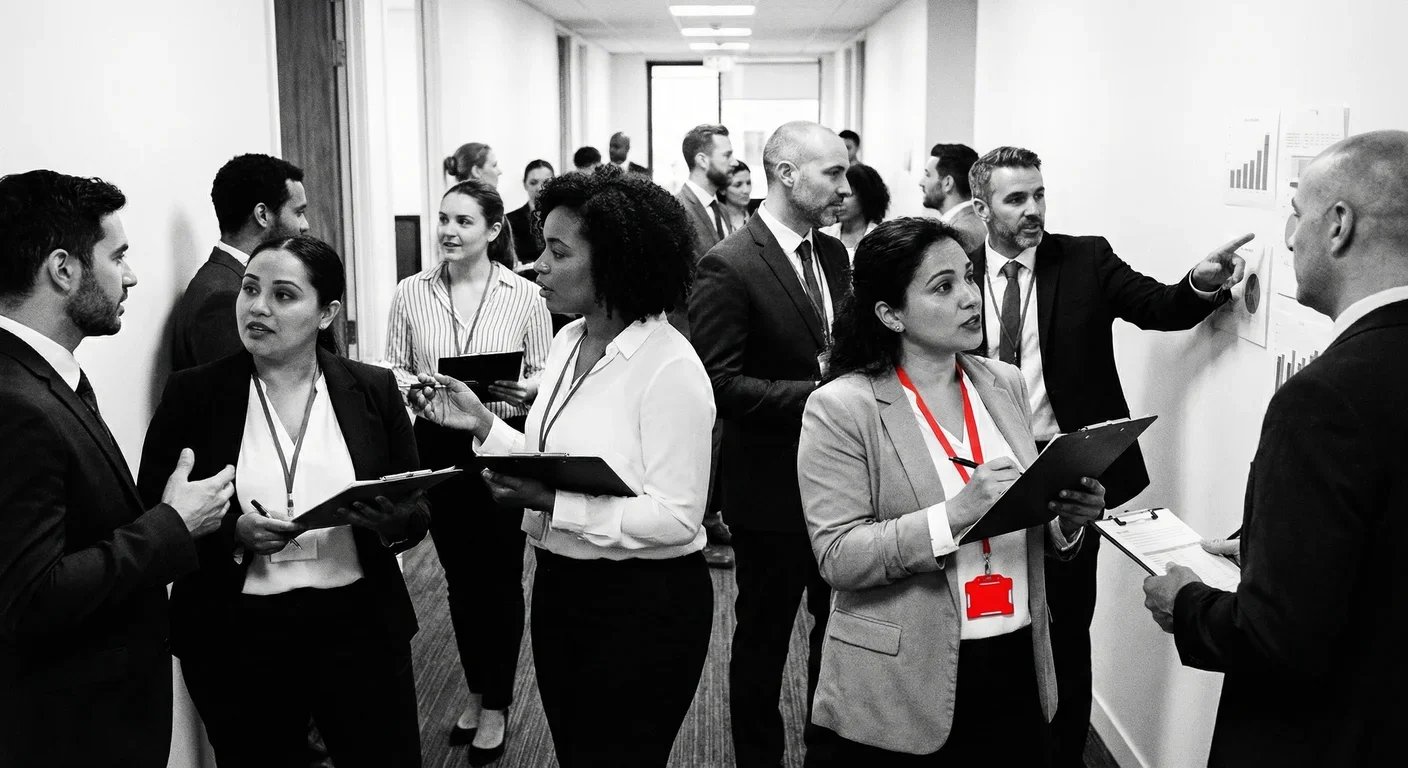
Team collaboration in action during effective recruitment and soft skills assessment

The bottom line: Companies using validated soft skills assessments outperform competitors by 35% in first-year retention.

You have read the data. You have seen the case studies. BCG reported a 1484% ROI. JPMorgan boosted engagement by 40%. Hilton cut turnover dramatically. The question is simple. What will you do next?

Three Actions You Can Take Today

Do not wait for a perfect moment. Start now.
  • 1 Audit your current hiring process for soft skills gaps
  • 2 Select one validated assessment tool to pilot
  • 3 Measure baseline metrics before implementation
Your competitors are already using these tools. 81% of US employers now prioritize soft skills evaluation. The gap widens every quarter you wait.

What SIGMUND Offers You

SIGMUND provides science-backed assessments built for real-world hiring. Not theoretical exercises. Practical tools that predict actual job performance. Our personality assessments measure what interviews cannot. Cognitive patterns. Emotional intelligence. Behavioral tendencies under pressure.

Key statistic: Organizations integrating soft skills data into hiring decisions reduce bad hires by 50% (SHRM, 2023).

The Cost of Inaction

Every mis-hire costs your organization between $17,000 and $240,000 depending on seniority level. That is not abstract. That is real money leaving your budget. Consider this scenario. You hire ten people this year without soft skills assessment. Statistically, two to three will underperform or leave within twelve months. That is $50,000 minimum in wasted recruitment costs. Validated assessments change that equation entirely.

Conclusion: Soft Skills Assessment as Strategic Investment

Let us recap what matters. Soft skills are not intangible qualities you hope to discover during interviews. They are measurable competencies that predict 58% of job success across industries. The science is clear. The data is overwhelming.

What We Covered

  • Foundation Soft skills drive 58% of workplace performance
  • Tools Validated assessments reduce hiring bias by 30-50%
  • ROI Returns range from 35% to 1484% depending on implementation
  • Trends AI, mobile-first, and gamification reshape 2024 testing
  • Results Companies report +40% productivity and +40% retention
The talent market will only intensify. Remote work expands candidate pools globally. Competition for high-performers increases annually. Subjective hiring methods cannot keep pace.

"The best predictor of future performance is past behavior measured through validated assessment tools." — Frank Schmidt, meta-analysis of 85 years of personnel selection research

Your Next Step

Stop guessing. Start measuring. Explore our latest HR resources for deeper implementation guidance. Or jump straight to action with a personalized assessment for your team. The companies winning the talent war in 2024 share one trait. They make decisions based on data, not gut feeling.

Pret a transformer votre recrutement ?

Decouvrez les tests d'evaluation SIGMUND -- objectifs, scientifiques, immediatement actionnables.

Decouvrir les tests

Frequently Asked Questions

Soft skills assessment in recruitment is the systematic evaluation of candidates' emotional intelligence, communication abilities, problem-solving approaches, and behavioral traits using validated psychometric tools. Unlike technical skill testing, these assessments reveal how candidates collaborate, adapt, and lead—critical factors that predict long-term job success and cultural fit.

Soft skills determine workplace success beyond technical abilities. Candidates lacking emotional intelligence or collaboration skills often fail within six months despite strong resumes. Companies using validated soft skills assessments outperform competitors by 35% in first-year retention. JPMorgan reported a 40% boost in employee engagement through systematic soft skills evaluation.

Assess soft skills using validated psychometric tests, structured behavioral interviews, and situational judgment tests. Focus on measuring emotional intelligence, cognitive ability, and behavioral traits objectively. Combine multiple assessment methods for accuracy. Tools like personality inventories and competency-based questionnaires provide data-driven insights to eliminate gut-feeling hiring decisions.

Effective psychometric tests for soft skills include emotional intelligence assessments, personality inventories like Big Five, cognitive ability tests, and situational judgment tests. These validated tools objectively measure communication style, leadership potential, teamwork orientation, and stress management. BCG documented a 1484% ROI from implementing structured assessment programs in recruitment processes.

Companies using validated soft skills assessments achieve 35% better first-year retention rates compared to traditional hiring methods. Hilton significantly reduced turnover by implementing systematic soft skills evaluation. The improvement comes from identifying candidates who genuinely align with company culture and possess the behavioral traits necessary for long-term success and job satisfaction.

The ROI of soft skills testing is substantial. BCG reported a remarkable 1484% return on investment from implementing structured assessment programs. Beyond direct financial returns, companies gain improved retention (35% better), enhanced employee engagement (JPMorgan saw 40% increases), and reduced turnover costs. The initial investment pays for itself within the first year.

Hard skills assessment measures technical abilities and specific knowledge through tests and certifications. Soft skills assessment evaluates interpersonal qualities like emotional intelligence, communication, adaptability, and leadership through psychometric tools. Hard skills are easier to quantify but soft skills better predict long-term job performance, cultural fit, and retention success.

Emotional intelligence directly impacts collaboration, conflict resolution, and leadership effectiveness. Employees with high emotional intelligence handle stress better, communicate more effectively, and build stronger team relationships. JPMorgan's focus on emotional intelligence assessments led to 40% higher engagement. It predicts success in customer-facing roles and management positions more accurately than IQ alone.

Reduce hiring mistakes by replacing gut-feeling decisions with validated behavioral assessments. Use psychometric tools to objectively measure candidates' cognitive abilities, personality traits, and emotional intelligence. Combine structured interviews with assessment data for comprehensive evaluation. This approach identifies red flags early and ensures candidates have the behavioral traits matching your organizational culture.

Top companies use soft skills assessments because traditional interviews fail to predict actual job performance. Structured assessments provide objective data on emotional intelligence, cognitive ability, and behavioral traits. Companies using these tools achieve 35% better retention, 1484% ROI (BCG), and significant turnover reduction. They eliminate expensive hiring mistakes and build stronger, more cohesive teams.

Additional Resources

Go Further

Deepen your understanding of each dimension of psychometric tests with our expert guides — validated methods, case studies, legal compliance, and job profiles.

Selection & Assessment
How to Choose Psychometric Tests: 7 Key Criteria for HR Professionals

How to Choose Psychometric Tests: 7 Key Criteria for HR Professionals

When selecting psychometric tests, HR professionals should prioritize key criteria such as reliability, validity, and relevance to ensure they effectively assess candidates' abilities and fit for the role. A thorough understanding of these factors will enhance hiring decisions and promote a cohesive workplace culture.
Read chapter
Essential Guide to Validity and Reliability of Psychometric Tests for HR Experts

Essential Guide to Validity and Reliability of Psychometric Tests for HR Experts

This essential guide demystifies the concepts of validity and reliability in psychometric tests, equipping HR experts with the tools to make informed hiring decisions. Boost your recruitment strategy by mastering these critical metrics to enhance workforce quality and organizational success.
Read chapter
Comparing Psychometric Tests and AI in Recruitment: Big Five Insights

Comparing Psychometric Tests and AI in Recruitment: Big Five Insights

The study compares the effectiveness of traditional psychometric tests, such as those based on the Big Five model, with the use of artificial intelligence in recruitment, revealing that AI can provide more objective and faster assessments while preserving deep psychological insights. This analysis highlights the potential advantages of a hybrid approach to optimize the candidate selection process.
Read chapter
Soft Skills & Assessment

Harnessing Big Five Personality Traits with AI for Smarter Recruitment Strategies

Leverage AI to analyze Big Five personality traits, enabling more effective recruitment strategies that align candidates' intrinsic qualities with organizational culture, boosting retention and performance. Elevate your hiring game by selecting top talent who truly fit your team.
Big Five + AI recruitment: why combining psychometric tests and artificial intelligence makes better hires. Practical guide for HR managers. Discover SIGMUND.

You're sorting 800 CVs a week. AI does it in 90 seconds. But it won't tell you whether that candidate will still be there in three years.

Innovative recruitment blending human touch and technology in Big Five AI hiring.

Big Five AI Recruitment: Why the Debate Is Framed Wrong

Every HR leadership meeting in 2025 revisits the same question. Should we invest in AI recruitment tools or stick with psychometric assessments? Software vendors push automation. Occupational psychologists defend evaluation depth. And the HR manager sits in the middle, expected to decide.

Here is what nobody says plainly: it is not a choice to make. It is a combination to build.

AI recruitment tools and the Big Five personality model do not compete. They do not cover the same ground. One accelerates. The other illuminates. Treating them as alternatives is like comparing a medical scanner with a physician's diagnosis. Both are necessary. Neither replaces the other.

Key figure: 67% of HR managers report lacking sufficient time to analyze each application properly — SHRM, 2024. AI solves that specific problem. It solves only that one.

Two Real Problems Happening at the Same Time

On one side: application volumes have exploded. A single open position now receives an average of 250 applications, according to Glassdoor data. On the other side: a bad hire costs between $50,000 and $150,000 per position, based on estimates from the Society for Human Resource Management.

AI answers the first problem. The Big Five answers the second. Both problems are real. Both solutions are necessary.

The HR manager who picks only one tool is leaving half the problem unsolved.

What Algorithmic Matching Cannot See

An ATS reads keywords. It identifies degrees, job titles, declared skills. It does not perceive a candidate's emotional stability under pressure. It does not detect openness to a major cultural shift inside the organization.

Algorithmic matching ranks. It does not understand. That is a fundamental distinction for any serious recruitment process.

"AI systems in hiring are only as good as the data they were trained on — and that data always reflects past human biases." — Harvard Business Review, 2023

This is not an argument against AI. It is an argument for knowing exactly what AI measures — and what it does not.

The Regulatory Shift That Changes Everything in 2026

The European AI Act classifies recruitment AI tools as high-risk systems. Transparency, explainability, and auditability will be mandatory obligations from 2026–2027 onward. In the United States, the EEOC has issued guidance specifically addressing algorithmic bias in employment screening.

Using an algorithmic filter without a complementary human evaluation layer will no longer be optional. It will be a compliance requirement.

HR managers who have already integrated psychometric assessments alongside AI screening are ahead of that curve — not just strategically, but legally.

The HR Manager Facing Two Simultaneous Realities

Think about the last senior hire your team struggled with. The candidate's CV was strong. The structured interview went well. Three months in, the team was imploding.

What did you miss? Probably nothing visible on paper. You missed something behavioral. Something stable. Something measurable — but only with the right instrument.

That is exactly where pre-employment assessments grounded in validated psychometrics come in. Not as a replacement for human judgment. As a sharpener of it.

  • Volume problem — 250+ applications per role, impossible to read individually. AI handles this.
  • Prediction problem — CV experience does not predict on-the-job behavior. Big Five data does.
  • Bias problem — Human interviewers carry unconscious bias. Validated psychometrics standardize comparison.
  • Retention problem — Poor cultural fit drives turnover. Personality-job alignment reduces it measurably.

A 2023 meta-analysis published on PMC (NIH) confirmed that Big Five personality traits — particularly conscientiousness and emotional stability — are among the strongest predictors of long-term job performance across industries.

The Question Every HR Manager Should Ask Right Now

Your current recruitment process has a screening step. It has an interview step. Does it have a behavioral prediction step?

If not, you are making final hiring decisions with incomplete information. Not because you lack skill. Because you lack the right instrument at the right moment in the process.

Attention: A structured interview captures what a candidate says under observation. A validated Big Five assessment captures how they consistently behave across contexts. These are not the same data point.

Why "AI or Big Five" Is the Wrong Starting Point

The Cambridge Psychometrics Centre has documented consistently that psychometric validity — the ability of a test to actually predict what it claims to predict — requires decades of research and normative data. AI-generated behavioral inferences from CV parsing have no comparable validation record yet.

That does not make AI useless. It makes it a different tool. With a different purpose.

TestGorilla's research on OCEAN personality testing in hiring concludes directly: personality assessments add predictive value that skills screening alone cannot provide. The two instruments work at different layers of candidate understanding.

"Pre-employment assessments combining cognitive and personality data reduce mis-hire rates by up to 35%." — SIOP (Society for Industrial and Organizational Psychology)

What SIGMUND's Approach Covers That Generic AI Tools Miss

Most AI recruitment platforms optimize for one thing: speed. They match keywords to job descriptions. They rank candidates by surface-level fit signals. They deliver a shortlist faster than any human team could.

That is genuinely valuable. SIGMUND does not dismiss it.

What SIGMUND adds is the layer that comes after the shortlist. The Big Five personality assessment — built on the OCEAN model, validated across professional populations — gives HR managers something no ATS delivers: a structured, evidence-based picture of how a candidate actually behaves at work.

Not how they describe themselves in a cover letter. Not how they perform in a 45-minute interview under social pressure. How they consistently operate across time and context.

The Five Traits That Predict What CVs Cannot Show

The OCEAN model — Openness, Conscientiousness, Extraversion, Agreeableness, Neuroticism — has over 50 years of peer-reviewed validation behind it. Each trait predicts specific behaviors relevant to specific roles.

  • Openness — Predicts adaptability, creativity, and comfort with organizational change.
  • Conscientiousness — The single strongest predictor of long-term job performance across all role types.
  • Extraversion — Relevant for client-facing, leadership, and team-collaborative positions.
  • Agreeableness — Predicts team cohesion and conflict management style.
  • Neuroticism (low) — Predicts resilience, stress management, and stability under pressure.

An AI screening tool sees none of this. It was not built to. The HR assessment suite from SIGMUND was built precisely for this layer of evaluation — the layer that determines whether a technically qualified candidate will actually succeed in your specific organizational context.

Assessio's Key Finding on AI and Human Judgment

Assessio's research on AI in recruitment — drawing on UK hiring data — reaches a clear conclusion: AI tools perform reliably on structured, rule-based tasks. They struggle with judgment calls that require understanding of human context, team dynamics, or organizational culture fit. Human oversight remains non-negotiable for those decisions.

That is not a limitation to work around. It is a design principle to embrace.

Key principle: AI for efficiency. Big Five for depth. The optimal recruitment process uses both — at different stages, for different purposes, with different expectations.

Is Your Current Recruitment Process Missing a Critical Step?

Before part two of this guide explores the combined process in detail, take 60 seconds with this checklist. It maps directly to where most HR recruitment processes have blind spots today.

  1. Step 1 — Do you have an automated screening layer that handles initial CV volume? (AI covers this)
  2. Step 2 — Do you assess behavioral traits before the final interview? (Big Five covers this)
  3. Step 3 — Can you explain to a rejected candidate why the algorithm filtered them out? (AI Act compliance, 2026)
  4. Step 4 — Do you track whether your hires still match their pre-hire assessment profile after 12 months? (predictive validity check)
  5. Step 5 — Do your interviewers have structured data to reference during final-stage conversations? (reduces bias, improves decision quality)

If two or more of those steps are missing from your current process, your recruitment decisions are less predictable than they need to be. Part two of this guide will show exactly how to close those gaps — with a concrete candidate journey combining AI screening and Big Five evaluation.

Want to see what a validated personality assessment looks like in practice? Explore the SIGMUND personality test and understand what your next shortlist is actually telling you.

How the Big Five Predicts What AI Cannot Measure

Influence of the five traits on recruitment.

A candidate looks perfect on paper. Strong GPA. Relevant experience. Clean CV. The ATS scores them highly. They get an interview. And then — six months after hiring — they're gone.

What happened? The algorithm never asked the right question. It matched keywords. It didn't measure the person.

This is where the Big Five (OCEAN) model becomes indispensable. It measures what resumes never reveal: stable behavioral tendencies that predict how someone will actually perform on the job, under pressure, within a team.

"Companies integrating Big Five assessments report a 30% increase in retention and a 22% gain in productivity." — Gallup, cited in Psico-Smart Blogs, 2024

Those numbers aren't abstract. They translate directly into fewer mis-hires, lower onboarding costs, and managers who stop firefighting and start leading.

The Five Traits That Change Everything in Hiring

The OCEAN model breaks personality into five stable, scientifically validated dimensions. Each one predicts specific workplace behaviors — independent of job title, industry, or years of experience.

  • Openness: Predicts creative thinking, adaptability to change, and comfort with ambiguity.
  • Conscientiousness: The strongest single predictor of job performance across almost every role studied.
  • Extraversion: Linked to sales performance, leadership emergence, and team energy.
  • Agreeableness: Correlates with collaborative behavior, conflict avoidance, and client-facing effectiveness.
  • Neuroticism: A reliable predictor of stress tolerance — and of attrition risk under pressure.

Research published in PMC/NIH on AI-based Big Five prediction found Pearson correlations ranging from 0.121 for neuroticism to 0.446 for agreeableness. These traits aren't vague impressions. They are measurable. They are stable. They are predictive.

Why Neuroticism Alone Is Worth Measuring

Most HR managers focus on what a candidate can do. Fewer ask what happens when things go wrong. Neuroticism answers that question directly.

A candidate who scores high on neuroticism may perform well in controlled conditions and struggle significantly when deadlines compress, team dynamics shift, or organizational priorities change. No CV line captures that. No ATS flag catches it.

A validated Big Five assessment surfaces it — before the contract is signed.

Conscientiousness: The Number One Predictor of Performance

Decades of psychometric research converge on one finding: conscientiousness is the most reliable predictor of job performance across roles, sectors, and seniority levels. Yet most screening processes never measure it directly.

An ATS might detect "detail-oriented" in a cover letter. That's self-reported, unvalidated, and easily gamed. A psychometrically validated personality test measures it objectively — with predictive validity that resumes simply cannot match.

Key point: AI reads what it was trained to read. The Big Five measures what is actually there — stable traits that predict behavior, independent of how well a candidate writes their CV.

AI + Big Five: The Recruitment Process That Actually Works

The question was never AI or Big Five. The real question is: where does each tool belong in your process?

Used correctly, AI and psychometric assessment don't compete. They answer completely different questions — at completely different stages of hiring.

Stage 1 — AI Handles Volume

A modern ATS filters 1,000 CVs in under two minutes. It checks for required qualifications, experience thresholds, and keyword alignment. It eliminates candidates who are genuinely unqualified. Fast. Scalable. Consistent.

According to a 2024 Psico-Smart analysis, 75% of organizations were already using AI in recruitment in 2022 — with projections reaching 90% by 2025. Volume screening at scale is now table stakes. If your team is still reading every CV manually, the bottleneck isn't talent — it's process.

Stage 2 — Big Five Adds the Human Layer

Once AI narrows the field, the real selection begins. This is where psychometric assessment earns its place.

A Big Five test administered to your shortlist answers questions AI cannot ask:

  • Will this person manage pressure without burning out? (Neuroticism score)
  • Will they drive results autonomously? (Conscientiousness score)
  • Will they collaborate or create friction? (Agreeableness score)
  • Will they adapt when the strategy pivots? (Openness score)

A McKinsey 2023 study, cited by Psico-Smart, found that AI-driven personality assessments predict job performance at 85% accuracy — compared to 50% for traditional methods. Validated psychometrics close that gap decisively.

Stage 3 — The Interview Confirms, Not Discovers

Here is the honest truth about most interviews: they confirm what the interviewer already believes. Unconscious bias operates powerfully in unstructured conversations. The interview stage should validate — not replace — objective data.

When the Big Five profile is in hand before the interview, the conversation becomes sharper. The hiring manager asks targeted questions around specific traits. The interview adds context. It doesn't make the call alone.

Caution: Several jurisdictions — including EEOC guidelines in the US and emerging ICO guidance in the UK — are increasing scrutiny on AI-driven hiring decisions. Any AI tool used in recruitment must be validated for bias, transparent in its criteria, and subject to human oversight. Big Five assessments, when scientifically validated, meet these standards. Many AI black-box tools do not.

A Concrete Use Case: The Candidate Journey That Reduces Mis-Hires

Abstract frameworks don't change behavior. Concrete examples do. Here is what an optimized combined process looks like for a mid-size company hiring 50 people per year.

  1. Step 1 — ATS screening: 300 applications reduced to 60 qualified profiles in 48 hours. AI filters on objective criteria: required qualifications, experience range, location.
  2. Step 2 — Big Five assessment: 60 candidates complete a validated 20-minute psychometric test. Results rank candidates on OCEAN traits relevant to the specific role profile.
  3. Step 3 — Shortlist of 12: Combined scoring — ATS match + Big Five alignment — surfaces the 12 candidates most likely to perform and stay.
  4. Step 4 — Structured interview: Each interviewer uses Big Five data to probe specific trait areas. Standardized scoring. Reduced interviewer bias.
  5. Step 5 — Offer and onboarding: Big Five profile informs onboarding — how this person learns, what feedback style works, where they may need support in the first 90 days.

The result? Fewer surprises. Fewer exits. A hiring process that respects both efficiency and human complexity.

For HR teams ready to implement this kind of structured approach, exploring validated recruitment assessments is the logical next step.

"AI can predict your personality from your face — and it might affect your career." — abaditya.com, February 2025

That headline isn't science fiction. A study of 96,000 MBA graduates used AI to extract Big Five traits from facial images, predicting school rank, compensation, and career advancement. The "Photo Big Five" showed predictive power comparable to race or attractiveness. That is the world hiring is moving into. The question is whether your organization is prepared — with ethical guardrails in place.

AI Bias in Hiring: What Every HR Manager Needs to Know

AI is not neutral. It learns from historical data. If historical hiring decisions were biased — and in most organizations, they were — the AI replicates that bias at scale, faster and less visibly than any human recruiter.

Assessio, a UK-based HR assessment consultancy, has documented multiple cases where AI screening tools systematically disadvantaged candidates from underrepresented groups — not through malicious design, but through flawed training data.

The Bias Risks Hiding in Your ATS

  • Historical pattern replication: If your top performers all attended the same type of institution, the AI learns to prefer that background — regardless of actual job relevance.
  • Proxy discrimination: Zip code, graduation year, and even name formatting can become proxies for protected characteristics inside an AI model.
  • Opaque decision-making: Many AI hiring tools cannot explain why a candidate was rejected. That opacity creates legal exposure under EEOC guidelines and emerging UK AI regulation.

How Validated Psychometrics Reduce Legal Risk

A scientifically validated Big Five assessment addresses these risks directly. The Cambridge Psychometrics Centre — one of the leading academic authorities on psychometrics and AI — emphasizes that validated assessments must demonstrate predictive validity, fairness across demographic groups, and transparent scoring.

A validated test measures traits, not background. It scores behavior, not biography. When used correctly, it is among the most equitable tools available in pre-employment assessment.

Human Oversight Is Not Optional

The EEOC has been explicit: AI tools used in hiring decisions must be subject to human oversight. They cannot operate as autonomous gatekeepers. An HR manager who delegates final decisions to an algorithm carries legal and ethical risk that a positive quarterly review will not offset.

The Big Five, administered and interpreted by trained professionals, satisfies that human oversight requirement. It gives structure to human judgment — it doesn't replace it.

Key point: The most defensible hiring process in 2025 combines AI efficiency with validated psychometric depth — and keeps a human in the decision loop. That's not a compliance checkbox. It's good hiring practice.

What Recruitment Will Look Like in 2026: Soft Skills as Competitive Advantage

Eightfold AI's 2025 predictions for 2026 describe a world where agentic AI reshapes talent acquisition — automating sourcing, screening, and initial candidate engagement at a scale that would have seemed implausible three years ago.

That future is arriving faster than most HR teams are prepared for. The organizations that will win are not the ones that automate the most. They are the ones that know what not to automate.

Soft Skills Are Becoming Harder to Find — and More Valuable

As technical skills increasingly commoditize — with AI tools handling coding, data analysis, and content generation — the traits that remain distinctly human gain premium value. Emotional regulation. Collaborative judgment. Adaptability under genuine uncertainty. These are Big Five dimensions, not algorithm outputs.

TestGorilla's research on Big Five hiring consistently shows that organizations using structured personality assessment make better-fit hires — with measurably lower early attrition rates. When every competitor is using the same AI screening tools, the differentiator becomes depth of understanding at the human layer.

The SIOP Research Position on Predictive Validity

The Society for Industrial and Organizational Psychology (SIOP) has long maintained that predictive validity is the gold standard for any hiring tool. A tool that predicts job performance reliably, fairly, and consistently earns its place in the process. One that correlates with surface signals — keyword frequency, profile photo, school name — does not.

Big Five assessments, when validated against actual performance outcomes, satisfy the SIOP standard. Most AI CV screening tools, evaluated honestly against the same criteria, do not.

What Forward-Looking HR Managers Are Already Doing

  • Auditing their ATS for demographic bias — before regulators do it for them.
  • Adding validated psychometrics at the shortlist stage — not as an afterthought, but as a core decision input.
  • Training interviewers to use Big Five profiles — reducing reliance on gut instinct and informal impression.
  • Using assessment data beyond hiring — for onboarding personalization, team design, and coaching priorities.

For a broader view of how structured assessment integrates across the employee lifecycle, the full range of SIGMUND HR assessments covers each of these stages with validated, actionable tools.

AI and Big Five Together: The Recruitment Standard for Serious HR Teams

Let's be direct about what the evidence shows.

AI in recruitment is not a passing phase. It is infrastructure. Every organization processing meaningful candidate volume will use it — or fall behind on speed and efficiency. That is settled.

What is not settled is how organizations use it. And what they pair it with.

A hiring process built on AI screening alone is fast and brittle. It optimizes for surface patterns. It misses the person behind the profile. It creates the conditions for the six-month exit that costs between 50% and 200% of annual salary to recover from — a cost range consistently cited across SHRM and Gallup research.

A hiring process that combines AI volume handling with Big Five depth is something different. It is efficient and accurate. It respects the candidate's complexity. It gives managers usable data — not just a ranked list.

"AI-driven personality assessments predict job performance at 85% accuracy, surpassing traditional methods at 50%." — McKinsey, 2023, cited in Psico-Smart Blogs

That 85% figure refers to AI tools applied to validated personality dimensions — not to raw CV screening. The accuracy comes from the psychometric model underneath. The AI is the delivery mechanism. The Big Five is the science.

SIGMUND is built on exactly this logic. Validated psychometrics. A modern platform. Results that HR managers can act on — immediately, confidently, and defensibly.

The choice isn't AI or human assessment. It never was. The choice is whether your hiring process answers both questions: Can this person do the job? And will they?

AI answers the first. The Big Five answers the second. Together, they give you the full picture — and the competitive edge that neither tool delivers alone.

Ready to transform your recruitment?

Discover SIGMUND's assessment tests — objective, scientifically validated, and immediately actionable.

Explore the tests

Frequently Asked Questions

The Big Five (OCEAN) is a scientifically validated psychometric model measuring five stable personality traits: Openness, Conscientiousness, Extraversion, Agreeableness, and Neuroticism. In recruitment, it predicts long-term job performance and cultural fit — information that resumes, LinkedIn profiles, and AI screening tools cannot provide.

AI recruitment software scans and ranks CVs by matching keywords, experience, and qualifications against job descriptions. It can process 800 applications in under 90 seconds. However, it only evaluates what is written — it cannot assess personality, behavioral tendencies, or whether a candidate will stay beyond 12 months.

AI screening filters candidates based on hard skills, keywords, and past experience — it measures what someone has done. Psychometric testing measures who someone is: stable personality traits that predict future behavior. Both serve different purposes; combining them produces significantly more accurate and durable hiring decisions.

AI handles volume and speed — sorting hundreds of CVs in seconds. The Big Five adds depth — predicting retention, team fit, and role suitability. Together, they cover the full picture: who can do the job and who will thrive in it long-term. Neither tool alone achieves this level of accuracy.

Modern AI recruitment tools can process thousands of CVs per week automatically. A task that takes a human HR team several days — sorting 800 applications — is completed by AI in approximately 90 seconds. This efficiency frees HR managers to focus on deeper candidate evaluation rather than administrative screening.

AI recruitment tools analyze structured data — job titles, skills, diplomas — but personality traits like Conscientiousness or Emotional Stability are not written on a CV. These traits are the primary predictors of whether an employee stays 3 years or leaves within 6 months. Only validated psychometric assessments can measure them reliably.

Apply the OCEAN model after AI pre-screening shortlists candidates. Assess each finalist on the 5 traits and compare results against a validated profile for the role. High Conscientiousness predicts reliability; low Neuroticism predicts stability under pressure. This two-step process significantly reduces mis-hires and early departures.

SIGMUND is a psychometric assessment platform built for HR managers that combines Big Five personality testing with AI-assisted recruitment workflows. It translates OCEAN trait scores into actionable hiring recommendations, helping teams move beyond CV matching to make data-driven decisions grounded in behavioral science and long-term performance prediction.

Expert insights
Use Cases
Psychometric Tests for Selecting Tomorrow's Sales Managers and Leaders

Psychometric Tests for Selecting Tomorrow's Sales Managers and Leaders

Psychometric tests are revolutionizing the selection of future sales managers and leaders by providing deep insights into candidates’ personalities and behavioral traits. These assessments help organizations identify the right talent that can drive sales success and foster effective team dynamics.
Read chapter
Complete Guide to Psychometric Testing for Sales Recruitment in the UK/US

Complete Guide to Psychometric Testing for Sales Recruitment in the UK/US

Unlock the secrets to successful sales recruitment with this complete guide on psychometric testing, tailored for the UK and US markets. Enhance your hiring process by identifying candidates with the right personality traits and cognitive abilities to drive sales success.
Read chapter
ROI & Compliance
Psychometric Testing and GDPR: A Practical Guide for HR Professionals

Psychometric Testing and GDPR: A Practical Guide for HR Professionals

"Psychometric Testing and GDPR: A Practical Guide for HR Professionals" provides essential insights for HR leaders on navigating the complexities of psychometric assessments while ensuring compliance with GDPR regulations, empowering them to make data-driven hiring decisions without sacrificing candidate privacy. This guide equips professionals with practical strategies to integrate effective testing methods within a legal framework, enhancing recruitment practices in the UK and US.
Read chapter
Maximizing ROI with Psychometric Testing: Cost Analysis and Case Studies

Maximizing ROI with Psychometric Testing: Cost Analysis and Case Studies

Discover how psychometric testing can significantly enhance ROI by streamlining recruitment processes and improving employee performance, supported by compelling cost analysis and real-world case studies. Unlock the potential of your workforce while optimizing your budget in the UK and US markets.
Read chapter