
Luke SIGMUND Consultant
×
NOM-035 Psychosocial Risks in Mexico: A Practical Compliance Guide
NOM-035 is not optional. It is proof. Can your HR file show what you measure, what you fix, and when you did it?

Point cle : In Mexico, a company must show that it identifies psychosocial risk, prevents harm, and keeps records that can stand up to an inspection.
NOM-035 psychosocial risks Mexico guide: what this rule really asks
NOM-035-STPS-2018 is a workplace rule in Mexico. It asks every workplace to identify psychosocial risks, prevent them, and act when problems appear. That sounds simple. It is not. The real test is evidence. Can you prove the process, not just the intent? Can you show what was measured, who saw it, and what changed after the result?
The rule applies across sectors. It also applies across size levels, based on the duties assigned by the standard. The date matters. NOM-035 entered into force in October 2019. Since then, HR teams have had to move from informal care to documented prevention. This is not about a nice culture poster. It is about a system that can survive a review by the STPS. The STPS Mexico is clear on the need for documented prevention.
Ask yourself one question. If an inspector asked today, what would your file show? A policy? A survey? A corrective action? Or only good intentions?
- Write a clear policy on psychosocial risk prevention.
- Keep dated proof of diffusion.
- Store results in a traceable file.
- Link every finding to a corrective action.
What counts as psychosocial risk?
Psychosocial risk is not abstract. It shows up in daily work. Too much workload. Unclear roles. Violence. Poor autonomy. Weak communication. Long stress cycles. These conditions affect sleep, focus, and behavior. They also affect KPI results. Error rates rise. Absenteeism rises. Coaching gets harder. People stop speaking up.
In practical HR terms, the rule pushes you to look at the work itself. Not only the person. That is why a clean onboarding process, clear feedback, and realistic targets matter. If a team cannot explain the task, the target, or the decision path, risk grows fast.
Why proof matters more than intent
Many teams believe a survey is enough. It is not. A spreadsheet is not enough either. NOM-035 is about a chain. Measure. Review. Act. Record. Without that chain, the file is weak. During a review, weak records create exposure. According to the IMSS, 75 percent of Mexican workers report stress-related fatigue. That figure is often cited alongside 73 percent in China and 59 percent in the United States. The comparison comes from IMSS reporting. It shows the pressure is real, not theoretical.
Sanctions are also real. The source material cites a fine that can reach 422,510 Mexican pesos. That is not a small cost. It is a board-level issue. It is also a daily HR issue. One missed record can turn a prevention effort into a compliance problem.
A company in Mexico must show what it measures, how it measures it, and what it does after the result.
NOM-035 STPS compliance: what HR must document
Compliance is not a slogan. It is a file. The file must show the policy, the tools used, the population covered, the results, and the actions taken. If one piece is missing, the chain weakens. That is where many HR teams fail. They collect data. They do not close the loop.
The source material points to a simple standard. A serious file includes a written policy, valid questionnaires, proof of diffusion, corrective actions, and follow-up. That is the minimum logic. It is also the logic the STPS expects to see. The official STPS rules page is a useful reference point for this framework.
Think about your own operation. Do managers know what to do after a negative result? Do they know who owns the next step? Do they know where the record lives?
The four proof points the file should contain
First, a written policy. Second, a valid assessment tool. Third, evidence that employees received it. Fourth, corrective actions with dates and owners. If you cannot find one of these in under a minute, the file is not ready.
This is also where process discipline matters. HR, line managers, and the CEO should know the same story. One version only. No side file. No verbal promise. No memory-based compliance.
Common mistakes that weaken compliance
The first mistake is using an internal survey with no clear method. The second is storing results in a folder nobody can trace. The third is failing to document what happened after the survey. The fourth is believing one training session closes the issue. It does not. Prevention needs proof.
That is also why tools matter. A structured assessment can help HR move faster and stay consistent. If your team needs a starting point, explore SIGMUND HR assessment tools for a more organized process.
Psychosocial risk factors in Mexico: what drives harm at work?
Psychosocial risk often starts with ordinary things. A manager sends conflicting instructions. A sales target changes every week. A shift runs late, again. The team keeps going. Then the errors begin. Then the silence begins. Then people leave.
That is why NOM-035 matters. It asks HR to look at the conditions that create pressure. The rule is not asking for theory. It is asking for observation, action, and traceability. The more visible the work process, the easier it is to prevent harm. The less visible it is, the faster risk spreads.
When stress becomes normal, many signals appear. Low focus. Irritability. Drop in feedback quality. More conflict. More sick leave. Less trust. These are not soft signals. They are business signals.
Typical risk drivers in daily HR life
Excess workload is common. So is role confusion. So is poor autonomy. So is lack of manager support. Violence, harassment, and unstable schedules also matter. Each one can damage performance and well-being at the same time.
A practical example is a customer service team with no clear escalation path. Calls pile up. Employees improvise. Mistakes rise. The file may show output, but not safety. That is the gap NOM-035 tries to close.
Why HR should care early
Early action is cheaper than repair. That is true in onboarding. It is true in coaching. It is true in prevention. A small problem in one team can become a culture issue if nobody documents the cause and the response.
The fastest way to lose control is to wait for a complaint. The wiser path is to detect signals before they harden into conflict.
SIGMUND tests for NOM-035: how assessments support prevention
Psychometric tools can support NOM-035 if they are used with discipline. The point is not to label people. The point is to detect risk factors, support managers, and create a clear record. Used well, an assessment helps HR move from opinion to evidence.
That is where SIGMUND can help. A structured test process can support stress detection, engagement review, and follow-up coaching. If your team wants a practical route, start with the stress resilience assessment. It helps you see how people respond under pressure.
You can also link prevention to motivation data. A low-engagement team rarely stays stable for long. The motivation and engagement assessment can add another layer of evidence.
What a good assessment flow looks like
Start with a defined population. Choose a valid tool. Communicate the purpose. Run the assessment. Review the output. Then act. That sequence matters. Without it, the test becomes noise.
Do not stop at the report. Use the report to plan coaching, manager support, and follow-up. The value is in the next step.
Why tests are useful for HR leaders
Tests create consistency. They reduce guesswork. They give HR a common language with managers. They also help turn a broad issue like stress into something measurable. That matters when you need a file that stands up to review.
If you want a broader view of labor topics, the SIGMUND HR resources page is a natural place to continue.
Attention : A test alone does not create compliance. It helps only when it is tied to a policy, a manager action, and a dated follow-up.
What the numbers say about stress at work
The data is hard to ignore. IMSS reporting says 75 percent of Mexican workers report fatigue linked to stress at work. That number is higher than the 73 percent cited for China and the 59 percent cited for the United States in the same source context. The message is simple. This is a major operational issue.
The compliance risk is also measurable. The source material cites a sanction up to 422,510 Mexican pesos for non-compliance. That amount changes how leaders think. It turns prevention into a financial decision, not only a people topic.
And the business cost is broader than the fine. Absenteeism rises. Quality drops. Manager time disappears. Team trust erodes. The CFO sees cost. The DRH sees friction. The CEO sees performance loss.
What this means for your file today
If your file has no dates, no owners, and no follow-up, it is weak. If your managers cannot explain the process in one minute, it is weak. If your assessment results never lead to action, it is weak.
Strong prevention is visible. It leaves traces. It shows who did what, and when.
A simple self-audit for HR
Ask three questions. Is the policy written? Are the assessments valid and documented? Are corrective actions visible and dated? If the answer is no to any one of them, the work is not done.
This is the point where many teams need structure, not more effort. Structure saves time.
Point cle : NOM-035 is a documentation rule as much as a prevention rule. If your records are weak, your protection is weak.
NOM-035 compliance timeline: what happened after October 2019?
The standard took effect in October 2019. That date matters because it ended the excuse of waiting. Since then, every workplace in scope has had time to build a method. The question is no longer whether the rule exists. The question is whether the company has adapted.
Long timelines can create false comfort. Teams think they still have time. Then an inspection arrives. Or a conflict escalates. Or turnover rises. At that point, the lack of structure becomes visible very fast.
That is why prevention should be part of the calendar, not a one-time event. Annual review. Manager refresh. Follow-up. Record retention. Clear ownership. These are not extras. They are the backbone.
What to do before the next review
Review your policy. Review your records. Review your tools. Review the people responsible for follow-up. Then close the open items. That is the work.
Do not wait for perfect conditions. Start with what you can prove today.
A direct next step for HR teams
If you need a structured way to begin, use a tool that can support assessment, reporting, and follow-up. Then connect it to manager action. That is how prevention becomes a system.
NOM-035 psychosocial risks Mexico guide: what to do now
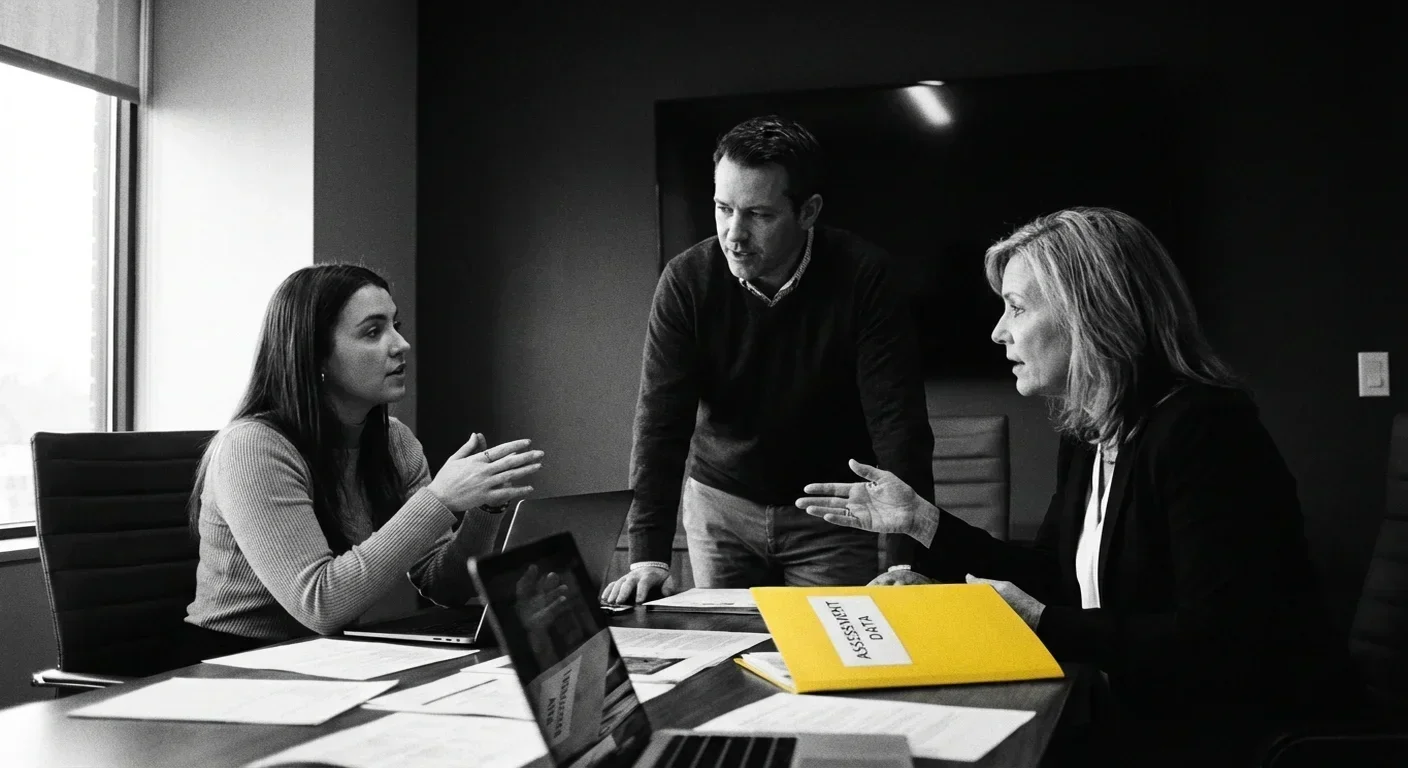
What happens if stress becomes normal? What happens if silence hides burnout? NOM-035 makes the answer clear. You do not wait for a crisis. You look for the risk, record it, and act. For medium-sized firms, the rule calls for questionnaires at least every two years. For large employers, the organisational environment gets reviewed every two years too. The point is simple. Psychosocial risk prevention is not a slogan. It is a working routine.
Start with a clean internal map. Who is exposed? Where are the pressure points? Which teams carry the heaviest load? Use a short questionnaire, manager interviews, and absence data. Then compare what people say with what the numbers say. The Ogletree overview notes that non-compliance can lead to fines of about 25,000 USD. That is a real cost. But the hidden cost is bigger. Lost trust always costs more.
Point cle: A two-year review cycle is the floor, not the target. If your turnover is rising now, act now.
Build a simple risk map
Use facts. Not feelings. Count overtime hours. Count sick days. Count exit interviews that mention pressure or poor leadership. Then ask one direct question in every team: where does work become hard to sustain? That question opens doors. It also reveals bad habits. A manager who sends late-night messages may think he is efficient. The team may call it fear.
- Review workload by team and role.
- Identify repetitive stress triggers.
- Track absence, turnover, and incident data.
- Document the root cause of each risk.
Use the right proof
Do not rely on opinion alone. The Payroll Mexico guide says stress and burnout can drive up absenteeism by 30%. That is enough to justify action in any budget meeting. You can also benchmark engagement, use coaching notes, and review manager feedback. The data must show a pattern. The pattern must lead to one decision. Fix the source.
NOM-035 obligations: how HR should respond
NOM-035 is not only about diagnosis. It is also about response. Once a risk is identified, the employer must document the corrective action and make support available when warning signs appear. That can mean access to medical help or psychological care. It does not mean the employer must deliver treatment directly. It does mean the employer must stop pretending the issue will vanish by itself. Will one email solve overload? Will one workshop fix weak leadership? No. The response must change the work.
Good HR teams move fast, then keep records. They set deadlines. They assign owners. They review progress every month. That is how compliance becomes practical. The Hrider summary notes that the rule began in October 2019 and added broader psychosocial duties on 23 October 2020. The timeline matters because it shows the law was built in stages. Your response can be staged too. But it cannot be vague.
A policy without follow-through is just paper.
Assign clear owners
Every action needs one owner. Not three. One. That person tracks the task, the date, and the result. A manager owns workload changes. HR owns records. The CEO owns tone. That is how accountability works in real life. If nobody owns the issue, the issue owns the room.
Document the action
Keep a simple file. Add the survey summary. Add the meeting note. Add the corrective action. Add the follow-up result. Use dates. Use names of roles. Use outcomes. This makes audits easier. It also makes internal learning possible. Next time, you will know what worked.
For broader prevention logic, the INRS prevention framework is a useful reference, even if it is not Mexican law. It reinforces a basic principle: remove the hazard when possible, then reduce what remains. That principle fits psychosocial risk prevention well.
Psychosocial risk prevention Mexico: what measures work
Real prevention is visible in daily work. It is not a poster. It is not a slogan on a wall. It is a manager who plans capacity before assigning work. It is a leader who notices when a high performer stops speaking. It is a team that can say no to impossible deadlines. That is psychosocial risk prevention in action. It protects energy before exhaustion appears.
Make the work easier to sustain. Review meeting load. Reduce after-hours messages. Clarify roles. Improve onboarding so new hires do not spend weeks guessing. Train managers to give better feedback. The cost is low compared with the cost of churn. The ROI is often visible in fewer absences, steadier performance, and better retention. If you want a structured way to measure resilience, explore the stress and resilience assessment.
- Limit unnecessary overtime.
- Train managers in feedback and coaching.
- Clarify roles during onboarding.
- Review workload at least monthly.
Use measurable actions
Choose actions that can be counted. For example: reduce late meetings by 20% in one quarter. Cut repeated escalation cases by 15%. Raise completion of manager training to 100%. A plan without numbers is a wish. A plan with numbers is management.
Link prevention to engagement
People stay where they can breathe. They stay where effort is fair. The motivation and engagement assessment can help you see where commitment is strong and where it is fading. Use that signal early. Do not wait for exit interviews.
The legal and operational lesson is blunt. Prevention lowers risk. It also protects the brand. Teams talk. Candidates talk. Clients hear it too.
NOM-035 compliance timeline: what to do by quarter
Timeline beats panic. Break the work into quarters. In quarter one, define scope, owners, and data sources. In quarter two, run the survey and review the results. In quarter three, launch corrective actions and manager coaching. In quarter four, measure what changed. Then repeat. That cadence keeps compliance alive. It also turns a legal duty into a management habit.
The source material shows two key timing facts. Medium-sized firms must run questionnaires at least every two years. Large firms must evaluate the organisational environment every two years. The first NOM-035 stage took effect in October 2019. The second major stage took effect on 23 October 2020. Those dates matter. They show that the rule is already mature. No one can claim surprise now. The only question is execution.
Quarter one
Confirm who falls inside the rule. Build the risk inventory. Select survey questions. Tell managers what will happen. Silence creates fear. Clear communication reduces it.
Quarter two
Launch the survey. Protect anonymity where needed. Explain why the data matters. The more people trust the process, the better the data will be.
Quarter three and quarter four
Act on the results. Revisit the numbers. Compare absence, turnover, and coaching notes. Then decide what to stop, what to simplify, and what to improve. The process is not fancy. It is disciplined.
Attention: A survey with no action plan creates cynicism fast. People remember that.
NOM-035 sanctions and business risk: why this matters
Some leaders move only when a penalty is visible. That is not ideal. Still, it works as a wake-up call. Ogletree reports that the STPS can impose fines of about 25,000 USD for non-compliance. That amount is not abstract. It can buy training. It can fund better tools. It can also disappear in one inspection.
The larger risk is operational. Burnout weakens service. Absence disrupts schedules. Disputes consume manager time. A 30% rise in absenteeism, as noted in the Payroll Mexico guide, can break a small team very fast. If one team loses two people, who covers the load? If managers are already overloaded, what breaks next? These are not theoretical questions. They are daily ones.
What senior leaders should review
- Risk register for psychosocial hazards.
- Survey completion rate and response quality.
- Corrective actions closed on time.
- Absence, turnover, and grievance data.
What to say in the board room
Use plain words. “We are not guessing anymore.” “We have a duty to act.” “The cost of delay is visible.” Those sentences work because they are direct. They connect law, risk, and money. That is where decisions happen.
For official context, you can also consult the Mexican labour authority, STPS. Use the public rule text as your legal anchor. Use internal metrics as your management anchor.
NOM-035 action plan for HR managers
Keep it simple. List the risks. Rank them. Assign owners. Set deadlines. Review progress. Repeat. That is the core of a working plan. If you are running Mexican operations, the question is not whether you can afford this. The question is whether you can afford the cost of delay.
- 1 Map the teams with the highest pressure.
- 2 Run the required survey or organisational review.
- 3 Record the corrective action.
- 4 Train managers on coaching and feedback.
- 5 Measure the result in 90 days.
If you want a broader HR view, browse SIGMUND HR assessments or read more in SIGMUND HR news. These resources can help you build a more objective process around stress, motivation, and commitment. That is where good compliance starts. It ends with a healthier work day.
Ready to transform your hiring process?
Discover SIGMUND assessment tests — objective, science-based, immediately actionable.
Discover the testsFrequently Asked Questions
NOM-035 is a Mexican labor standard that requires employers to identify psychosocial risks, prevent workplace harm, and keep evidence of compliance. It applies to companies of different sizes and focuses on work stress, violence, and organizational factors that can affect employee health and performance.
For medium-sized companies, the required questionnaires must be applied at least every two years. Large employers must also review the organizational environment every two years. Regular cadence matters because it shows ongoing prevention, not a one-time effort during an inspection.
HR must prove that risks were identified, corrective actions were taken, and records were kept. NOM-035 is important because inspectors expect documentation, not promises. A solid HR file can show surveys, action plans, training, follow-up dates, and evidence of completed preventive measures.
A company should document risk identification, employee questionnaires, training activities, preventive actions, incident follow-up, and any changes made to reduce pressure or violence. The goal is to keep a clear trail that shows what was measured, what was fixed, and when each step happened.
Risk identification means finding the psychosocial hazards, such as overload, unclear roles, or workplace conflict. Risk prevention means taking action to reduce those hazards, such as adjusting workloads, improving communication, training managers, or updating internal policies before harm grows.
Prepare by organizing a complete compliance file, updating surveys, confirming preventive actions, and assigning clear responsibilities. A good practice is to review evidence every 6 to 12 months so nothing is missing. If an inspector arrives, the company should quickly show records, dates, and results.
📚 Related articles
- →How psychometric tests can reduce unconscious bias in hiring and strengthen DEI practices
- →Using psychometric tests beyond selection to improve employee retention
- →AI-based HR soft skills evaluation with a focus on compliance and people analytics
- →A comparison of psychometric tests and AI hiring tools for HR decision-making
Explore the SIGMUND Test Catalog
Discover our comprehensive range of scientifically validated psychometric tests