
Luke SIGMUND Consultant
×
Psychometric Tests for Organizational Culture OCAI: Corporate Culture Assessment
Psychometric tests organizational culture OCAI show what a CV hides. They expose the habits that shape daily work, conflict, and pace.
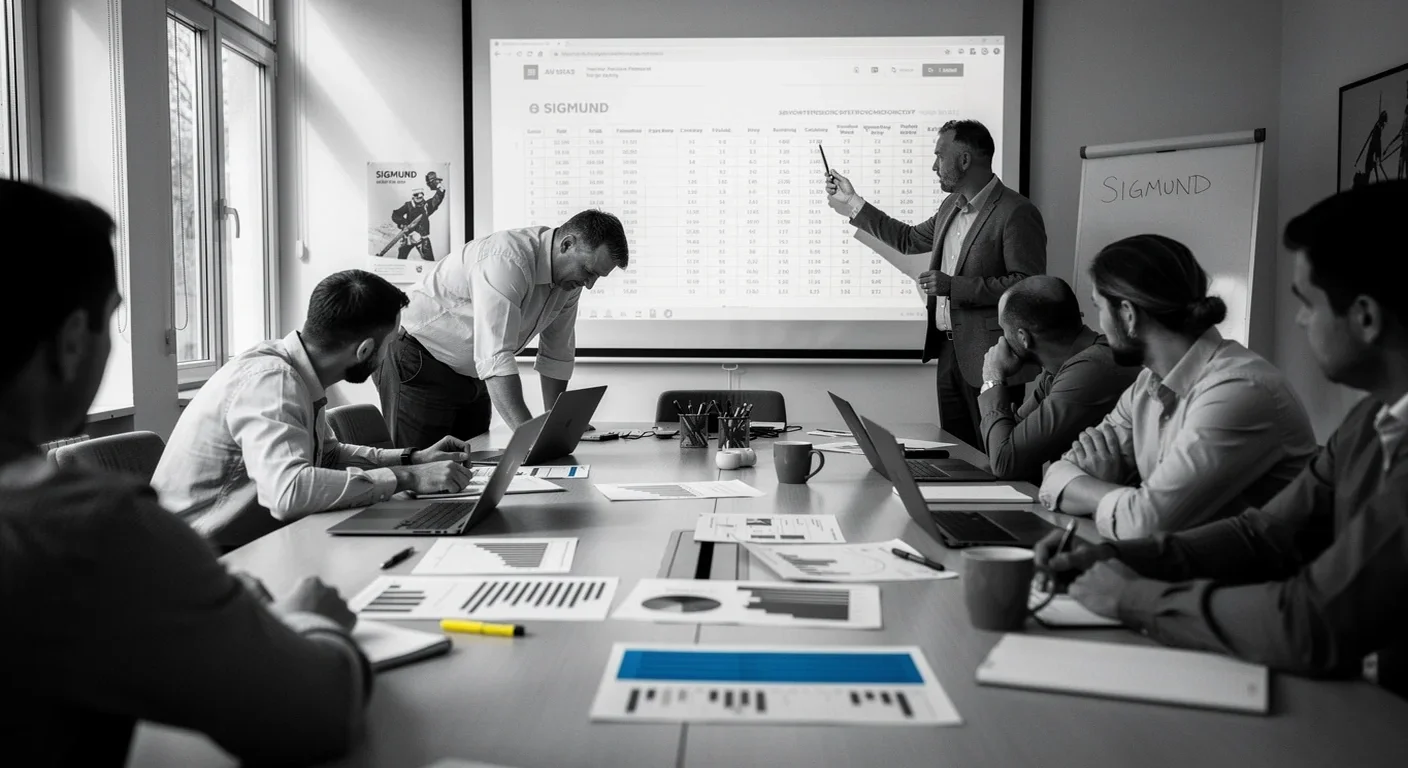
Psychometric tests organizational culture OCAI: what are you really measuring?
Culture is not a poster on the wall. It is what people do when no one is watching. It is how meetings run. It is how feedback lands. It is how fast decisions move. Psychometric tests organizational culture OCAI help HR teams see these patterns with structure. They move the discussion from opinion to evidence.
That matters in a 50 to 500 employee company. One poor hire can disturb the whole team. One strong hire can calm it down. The question is simple. Does the person thrive in this system? Or only in the interview room?
According to the SHRM body of research, structured assessment reduces subjective error in hiring decisions. The ISO 10667 standard also frames assessment as a formal, evidence-based process. That is the bar. Not guesswork. Not charm.
What an OCAI report shows
An OCAI report reads the culture through clear dimensions. It can show whether your team runs on control, collaboration, competition, or creativity. It can also show whether the current reality is aligned with the culture you say you want. That is where psychometric tests organizational culture OCAI become useful. They give language to what people feel every day.
- Control Clear rules. Tight process. Low room for improvisation.
- Collaborate High trust. Shared ownership. Strong team voice.
- Compete Performance pressure. Fast pace. Visible KPI focus.
- Create Experimentation. Freedom. New ideas tested quickly.
Why the first month can lie
In week one, almost every candidate looks good. They are prepared. Polite. Focused. The real signal appears later. Do they ask for clarity every hour? Do they act well under ambiguity? Do they need coaching or a rigid frame? A culture assessment catches these differences earlier. That saves time. It also saves morale.
Point cle: A culture problem rarely starts as a crisis. It usually starts as friction that nobody names.
Corporate culture assessment: why gut feel is not enough
Gut feel is fast. That is also the problem. It blends voice, charm, shared background, and bias. A manager may say, “I know it when I see it.” But can they explain it? Can they defend it? Can they compare two profiles on the same basis?
Corporate culture assessment gives a common frame. It helps you separate personal taste from operational need. The result is not colder hiring. It is cleaner hiring. A person may be excellent and still fail in a culture that asks for another rhythm. That is not a value judgment. It is a fit issue between a person and a system.
A practical example from daily HR work
Picture two project leads. One wants autonomy. One wants frequent direction. If your team works with weekly priorities, rapid feedback, and little control, the first profile may last longer. The second may feel lost. Both can be skilled. Only one may stay engaged. That is why psychometric tests organizational culture OCAI matter before the offer, not after the resignation.
The hidden cost of a wrong cultural choice
The Dares reported a turnover rate of 15.9% in 2025. High movement means more hiring cycles, more onboarding load, and more manager time lost. It also means more pressure on the team that stays. If you want a stable environment, you need a diagnostic method. Not a hunch.
Attention: A strong resume can hide weak adaptation to your working culture. That is a costly blind spot.
CVF framework and culture gap analysis: where are the real tensions?
The CVF framework is useful because it simplifies a complex subject. It maps culture into a few clear dimensions. That makes comparison possible. It also makes culture gap analysis visible. You can compare the current culture with the preferred culture. Then you can ask a hard question. What will break if nothing changes?
That question matters in leadership meetings. People often say they want innovation, yet they reward caution. They say they want ownership, yet they approve every detail. Psychometric tests organizational culture OCAI help expose these contradictions. The gap is often not in the people. It is in the system.
What a gap looks like
A company may say it wants initiative. But the manager delays decisions for days. A team may say it values trust. But every message gets copied upward. These patterns are small. Then they repeat. The result is fatigue. Then turnover. Then weak onboarding. Then more pressure on the next hire.
What to measure first
- Decision speed.
- Autonomy level.
- Feedback frequency.
- Risk tolerance.
- Clarity of roles.
The ICO UK expects data use to be fair, relevant, and transparent. That is a useful benchmark when you assess people and culture. Keep the purpose clear. Keep the report readable. Keep the method consistent.
SIGMUND psychometric tests: a clearer way to read culture
Some tools measure personality. Some measure aptitude. Some produce a culture report. The value appears when these elements sit together. That is where SIGMUND stands out. It combines Big Five personality data, aptitude tests, and a structured OCAI culture report in English. The result is easier to use in HR meetings. It is easier to explain to managers too.
If you need a broader assessment view, explore SIGMUND HR assessments. If you want to go deeper on traits, the personality test gives a clear read on behavioral style.
How HR teams use it
One team uses it before final interviews. Another uses it during onboarding. A third uses it after a merger to compare cultural expectations. In each case, the logic is the same. Reduce noise. Keep evidence visible. Make the next decision easier.
A simple rule
If you cannot describe the culture in measurable terms, you cannot manage it with confidence.
If you want the next step now, use the SIGMUND test platform and start from a clear diagnostic base.
Corporate culture assessment in practice: what should you do first?
Start with one team. Not the whole company. Pick a team with clear friction. Maybe onboarding is slow. Maybe feedback is awkward. Maybe turnover is higher than expected. That is your starting point. Then measure the current culture. Then compare it to the culture needed for performance.
Keep the process simple. Name the behavior. Name the impact. Name the expected result. The aim is not to label people. The aim is to design a working environment where the right people can do their best work without constant friction.
A short action list
- 1 Define the team you want to assess.
- 2 Gather the current culture signals.
- 3 Compare the signals with the target culture.
Psychometric tests organizational culture OCAI are strongest when they lead to action. Not a slide deck. Not a vague workshop. Action. That is where the ROI appears. That is where the manager sees less friction. That is where the team feels the difference.
How psychometric tests organizational culture OCAI sharpens diagnosis

Culture is not a poster. It is daily behavior. It is what gets praised. It is what gets ignored. That is why psychometric tests organizational culture OCAI matters. It gives structure to a topic that is often vague. The personality assessment layer helps you see how people tend to act. The OCAI layer helps you see what the organization rewards. Put both together, and the picture gets clearer. Are your managers asking for collaboration, while rewarding solo output? Are your new hires strong on soft skills, yet dropped into a rigid system?
The HR assessment suite gives you more than a score. It helps you separate values, behavior, and capability. That is useful in a 50-person team. It is useful in a 500-person enterprise. It is useful when the CEO says culture is fine, but turnover says something else. A corporate culture assessment works best when it is simple, repeated, and tied to real work. Not theory. Not slogans. Daily proof.
Point cle: A good organizational culture evaluation does not ask, "Do people like the culture?" It asks, "What does the culture reward, and who thrives inside it?"
What OCAI reveals fast
OCAI is useful because it compares the current culture with the desired culture. That gap matters. It often explains why onboarding stalls, why coaching fails, and why feedback sounds polite but changes nothing. If your managers say they want innovation, but every mistake gets punished, the data will show tension. If your teams say they value autonomy, but every decision needs approval, the system will show friction. That is the point. A culture gap analysis turns feelings into evidence.
According to SHRM, 64% of HR professionals say psychometric tests improve their ability to select people aligned with culture. That is not a minor signal. It is a hiring pattern. It also links to a 29% improvement in hiring success. Use that kind of number wisely. Numbers are not the answer. They are the flashlight.
What the CVF framework helps you name
The CVF framework gives language to culture. Clan. Adhocracy. Market. Hierarchy. Each one creates different behaviors. Each one rewards different people. That matters when you use psychometric tests organizational culture OCAI. A person with strong Big Five traits for openness may struggle in a rigid hierarchy. A person with high conscientiousness may thrive there. Neither person is better. They are different. The system decides who wins.
- Compare current culture with desired culture.
- Link behavior to rewards.
- Spot where managers say one thing and reinforce another.
Why the data matters now
Harvard Business Review reported in 2023 that 78% of organizations use psychometric tests to assess culture compatibility. The same source said these tools were linked to a 30% rise in professional success and a 25% drop in turnover. That is enough to pay attention. It also means the old "gut feeling" model is expensive. When the wrong person leaves after six months, the cost hits hard. Lost time. Lost momentum. Lost trust.
How to apply psychometric tests organizational culture OCAI in hiring
Start before the interview. That is where most mistakes begin. A strong corporate culture assessment should sit beside the role profile, not behind it. First, define the culture you need. Then decide which behaviors support that culture. Then select the test battery. For SIGMUND, that means Big Five personality data, aptitude measures, and a structured OCAI report in English. One source. One view. Less noise. More clarity.
The Journal of Applied Psychology meta-analysis in 2022 reviewed 147 studies. It found a 35% improvement in cultural alignment for new hires and a 22% increase in job satisfaction. That is serious evidence. It also suggests that organizational culture evaluation should not be a nice-to-have. It should be part of selection design. Not after the hire. Before the offer. If you want a practical benchmark, look at the process, not the slogan.
Culture gets measured when selection choices are repeated. One strong hire is luck. Ten strong hires are a system.
Use a simple 5-step process
- Define the culture profile for the role and team.
- Run psychometric tests before final interview rounds.
- Compare test data with manager expectations.
- Review the OCAI report with one trained reviewer.
- Decide with evidence, not preference.
What good application looks like
Keep it concrete. A sales team in a market culture may need drive, resilience, and fast feedback loops. A product team in an adhocracy may need curiosity and comfort with ambiguity. A support team may need steadiness and service orientation. Psychometric tests organizational culture OCAI helps you see those needs early. It also reduces false confidence. A polished interview can hide a bad cultural pattern. Test data is harder to fake.
Use local rules too. The SIGMUND testing platform supports a cleaner process when you need structure across teams and locations. In the UK, the ICO expects fair and transparent handling of people data. In the US, EEOC guidance matters when assessments affect selection decisions. Keep consent, purpose, access, and retention clear. That is not bureaucracy. That is risk control.
What to avoid
Attention: Do not use culture as a hidden proxy for similarity. Do not confuse comfort with capability. Do not hire only people who sound like the current team.
For assessment design, ISO 10667 is a useful reference. It sets expectations for service delivery in assessment and measurement. That matters when you want a process that is defensible, repeatable, and explainable. The question is simple. Could you defend this decision in front of a board, a candidate, and a regulator?
How to diagnose a culture gap with OCAI data
A culture gap analysis starts with a comparison. Current state. Desired state. Then you look at variance. Not all gaps are bad. Some are strategic. If the CEO wants more innovation, the gap may be intentional. If the team wants stability, the gap may signal confusion. Psychometric tests organizational culture OCAI helps you see whether the gap is small, large, or just hidden by habits.
For daily use, look at four signals. Turnover in the first year. Time to productivity. Internal mobility. Engagement score movement. If one team shows strong technical performance but weak commitment, the issue may not be skill. It may be culture. SHRM’s 2024 reporting on talent practice continues to emphasize structured, evidence-based selection. That is the direction. Less guesswork. More proof.
Read the data like an operator
- Compare test results by team, not only by individual.
- Review the link between culture scores and turnover.
- Watch for promotion patterns that reward one culture type only.
Look for the hidden cost
When people leave because the culture feels wrong, the loss is larger than replacement cost. It affects coaching time, team trust, and client continuity. Forbes reported in 2021 that 67% of organizations use personality tests in hiring and that engagement rose by 31% where psychometrics were part of the process. Use that as a signal, not a promise. The exact number will vary. The direction is clear.
If the data points in the same direction across hiring, onboarding, and performance review, the diagnosis is stronger. That is when psychometric tests organizational culture OCAI becomes useful at the leadership table. It helps leaders stop debating opinions and start acting on patterns.
A quick leadership review
Ask three direct questions. What culture do we say we want? What culture do we reward today? What culture do our assessments predict? If those answers do not align, the gap is real. Do not hide it behind values posters. Fix the system. Fix the manager habits. Fix the selection method.
How to improve culture after the assessment
The report is not the finish line. It is the start of action. Once psychometric tests organizational culture OCAI shows the gap, build a plan that changes manager behavior and team routines. Start with onboarding. Many firms overload new hires with process, then wonder why commitment is weak. Start with feedback quality. If managers give vague feedback, culture stays vague. Start with coaching. Small habit changes beat one big speech.
Use the data to define the next ninety days. Not the next three years. Which behaviors need reinforcement? Which manager practices need retraining? Which team rituals need to stop? A culture plan works when it is concrete. For example, if collaboration is the goal, add shared ownership to project reviews. If accountability is the goal, make decision logs visible. If learning is the goal, normalize post-project reviews.
Make the plan visible
- Share the top three culture gaps with leaders.
- Assign one owner per gap.
- Set one KPI per gap.
- Review progress every 30 days.
- Refresh the OCAI view after change cycles.
Use the right combination
Psychometric tests work best when they are not alone. Pair them with structured interviews, manager calibration, and performance review data. SIGMUND is built for that kind of flow. The platform combines Big Five personality evidence, aptitude tests, and a structured culture report. That is useful when you want a clearer view of alignment, not just a personality label. It is also useful when the board wants a benchmark tied to ROI.
Ask yourself this. If two people look equally strong on paper, who will thrive in your actual culture? The answer is rarely the most confident speaker. It is the person whose behavior fits the work, the team, and the reward system.
What a SIGMUND culture report gives HR and OD teams
A strong organizational culture evaluation should help you decide. Not just describe. SIGMUND gives an English-language structure that combines psychometrics with a culture view. That helps HR directors and OD consultants compare candidates, teams, and managers with more confidence. It also reduces manual interpretation. That matters when time is short and the stakes are high.
One more data point. The HBR source reported a 25% reduction in turnover when personality testing is used. The Journal of Applied Psychology review showed a 22% rise in job satisfaction. SHRM reported 64% of HR leaders see better selection quality. Three sources. Three directions. Same message. Evidence-based selection improves culture decisions. That is why psychometric tests organizational culture OCAI is not just a diagnostic exercise. It is a practical operating tool.
Use it where the cost of error is high
- Leadership hiring.
- Team reshaping.
- Succession planning.
- Culture change programs.
Why this matters in real work
Think about a manager who performs well in a hierarchical setting but struggles in a collaborative one. Think about a high-potential hire who loves autonomy but enters a process-heavy team. Those are not abstract cases. They are Tuesday morning cases. The right report helps you see them early. The wrong hire costs more than salary. It costs energy. It costs trust. It costs time.
That is why a structured platform matters. It helps you turn psychometric tests organizational culture OCAI into a repeatable decision path. Less noise. Better decisions. Stronger teams.
Ready to transform your hiring process?
Discover SIGMUND assessment tests — objective, science-based, immediately actionable.
Discover the testsFrequently Asked Questions
Psychometric tests for organizational culture measure how people actually work, communicate, and make decisions inside a company. They help reveal hidden norms, shared behaviors, and culture gaps that are not visible on a CV. This makes it easier to diagnose alignment and improve performance with evidence.
The OCAI test measures company culture by comparing current practices with the culture people want. It evaluates six dimensions, including leadership, teamwork, and strategic focus. The result shows whether your organization is more clan, adhocracy, market, or hierarchy oriented, with clear culture gap insights.
Psychometric tests make culture diagnosis more objective, because they turn vague impressions into measurable data. They show which behaviors are rewarded, which are ignored, and where friction comes from. That clarity helps HR leaders and managers act faster, reduce bias, and prioritize the right changes.
Personality tests measure how individuals tend to behave, think, and interact. OCAI culture tests measure what the organization rewards and tolerates. Used together, they separate personal style from company environment, helping you see whether performance issues come from people, culture, or both.
Psychometric tests improve HR decisions by giving a structured view of fit, risk, and development needs. They support hiring, internal mobility, leadership assessment, and team design. Instead of relying on intuition alone, HR teams can use consistent data to make decisions that are clearer and more defensible.
The OCAI assesses six culture dimensions: dominant characteristics, leadership, employee management, organizational glue, strategic emphases, and criteria of success. These six areas create a complete picture of the current culture and the desired culture, making gaps easier to identify and address.
Test your mastery of organizational culture diagnosis with OCAI
Is your HR practice based on evidence, or on what the organization only seems to be?
5 questions · ~2 minutes
📚 Related articles
- →Assessing organizational culture with a corporate culture evaluation and OCAI guide
- →Enhancing company culture through psychometric tests and OCAI assessment
- →Assess your organizational culture with psychometric tests and company culture analysis
- →Unlocking success through organizational culture assessment and psychometric testing
Explore the SIGMUND Test Catalog
Discover our comprehensive range of scientifically validated psychometric tests