
Luke SIGMUND Consultant
×
Structured Psychometric Assessment for Recruitment: Compare and Choose the Best
A free DISC test can save time. It can also save bad hires. What if one profile explains why one person closes fast, and another keeps the team calm?
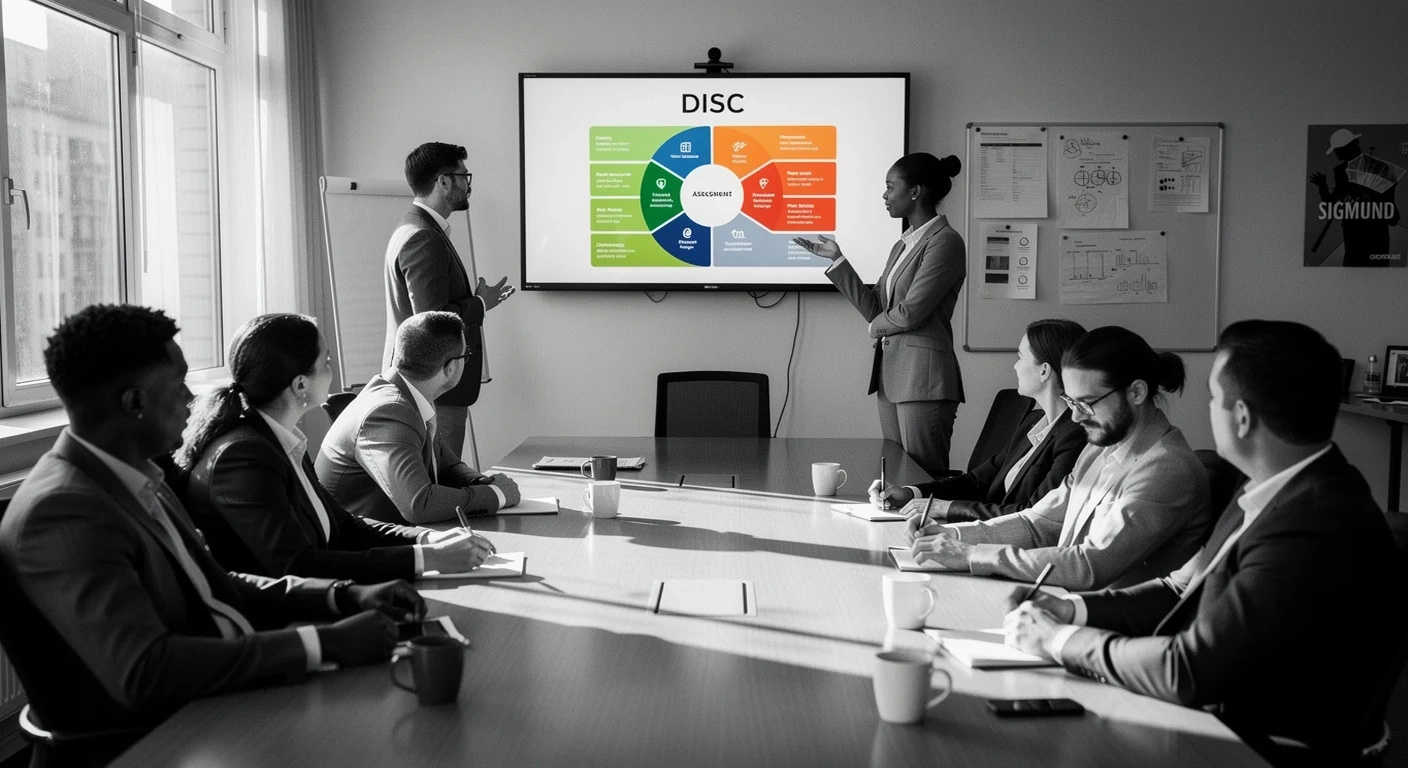
Free DISC test: what this personality profile really measures
The free DISC test is not a magic label. It is a structured read of behavior at work. It looks at four patterns: Dominance, Influence, Steadiness, and Conscientiousness. One person can show all four. Two or three often lead. That mix is the profile. That is why two people can answer the same question and still work in very different ways. One moves fast. One asks for data. One keeps the room steady. Which one do you need in your next hire?
For HR, the value is simple. DISC gives a shared language for interviews, onboarding, and coaching. It helps a manager stop guessing. It helps a team talk about friction without blame. It also helps during recruitment when a role needs pace, empathy, structure, or pressure tolerance. According to SHRM, structured hiring methods improve decision quality when they are used consistently. DISC works best inside that kind of process.
The four DISC styles in plain English
D is direct. It wants action. I is expressive. It wants contact. S is steady. It wants trust. C is careful. It wants proof. That is the basic map. Simple on purpose. A sales manager may need D and I. A payroll role may need S and C. A recruiter may need a different blend again. The point is not to rank people. The point is to understand work style before you ask for a result.
- D Fast decisions. Clear goals. Strong drive.
- I Energy. Influence. Easy contact.
- S Patience. Loyalty. Reliable pace.
- C Accuracy. Method. Control of detail.
Why the free DISC test matters in recruitment
A resume tells you what a person did. DISC helps you think about how that person may work. That is useful in interviews. It is useful in onboarding. It is useful when a team misses deadlines because no one owns the detail. It is also useful when a new hire talks too much and listens too little. The issue may not be skill. It may be style. A good assessment report makes that visible in minutes, not weeks.
“Behavior tools should support decisions, not replace them.” This idea aligns with ISO 10667, the international reference for assessment service delivery.
Free DISC test and structured hiring: why HR teams use it
HR teams use a free DISC test because hiring is not only about skills. It is also about how a person reacts under pressure, how they speak, and how they handle pace. A structured psychometric view reduces blind spots. It does not remove judgment. It makes judgment sharper. Think of a manager choosing between two strong candidates. One has the right CV. The other has the right style for the team. Which one will stay calm in week three?
The ROI is practical. Fewer surprises. Better onboarding. Faster coaching. More relevant feedback. SHRM has long shown that consistent selection practices help reduce costly hiring errors. In the UK, the UK ICO also reminds employers to handle personal data with care when using assessment tools. That means clear purpose, limited use, and clean process. A test is only useful when the process around it is clean.
What makes the test useful for managers
Good managers do not need more noise. They need a useful read. DISC gives a quick view of communication style, decision speed, and reaction to change. That helps in one-to-one meetings. It helps in conflict. It helps when goals slip. If a person with a high C profile needs more data, give it. If a person with a high I profile needs a human story, give that. Small shift. Big effect.
- Use it before onboarding to plan support.
- Use it in interviews to probe work style.
- Use it in coaching to shape feedback.
Where DISC can fail if you use it badly
DISC fails when people treat it like a verdict. It is not. It is a lens. A strong D can still be thoughtful. A strong S can still lead. A strong C can still sell. If you freeze someone inside one box, you lose the person. If you use the result as one input in a broader assessment battery, you gain value. That is the right move for recruitment and team management.
Point cle : A DISC profile should guide the conversation. It should never end it.
Your DISC profile: what each style tells you in daily work
Most people want a quick answer. Am I D, I, S, or C? The better question is this. What does my pattern do in real work? A D profile may push hard in a meeting. An I profile may win trust in a minute. An S profile may keep the team stable during change. A C profile may catch the error before it becomes a cost. These are not abstract traits. They show up in calls, emails, deadlines, and feedback.
In practice, the profile helps when you want to reduce friction. A manager who knows the style of each person can adjust the message. Short and direct for D. Warm and social for I. Calm and steady for S. Clear and exact for C. That is not manipulation. That is respect. It is also a fast way to improve onboarding and coaching without overcomplicating the process.
How the four styles show up at work
D asks, “What is the goal?” I asks, “Who is involved?” S asks, “What changes now?” C asks, “What is the evidence?” If those questions repeat in your head, the result becomes more useful. You stop fighting behavior. You start working with it. That is the real value of a personality test in HR.
What to do after you get your result
- Read the top two dimensions, not only the first one.
- Think about one real work moment where that style appeared.
- Share the result with your manager or recruiter.
- Use it in the next feedback meeting.
- Compare it with another assessment if the role is critical.
SIGMUND tests: where the free DISC test fits in a wider assessment battery
The free DISC test is useful. It is even better when it sits inside a wider battery. That is the SIGMUND logic. One test is a signal. Several tests give a stronger picture. For hiring, that matters. For management, that matters even more. A personality profile can show work style. A separate assessment can explore reasoning, soft skills, or role fit. Together, they help the HR team compare candidates with less noise and more structure.
If you want to go further, start with the personality test page. Then explore the full test catalogue. That is the cleanest way to see where DISC sits in the broader SIGMUND approach. It is not about one score. It is about building a decision process that is clear, repeatable, and easy to explain.
Why a multi-test view works better
A single score can mislead. A multi-test view can correct that. DISC can say how someone acts. Another test can show how they think. Another can show how they handle pressure. This is useful in recruitment, where the cost of a poor decision is high. It is also useful in internal mobility, when a person moves from one role to another and needs a different style of support.
Attention : A profile is not a label. Use it as data. Keep the final decision human.
A simple way to begin today
Take the free DISC test first. Read the result. Then compare it with the needs of the role. Ask one question. Does this style help the team work faster, safer, or with better feedback? If yes, you have a useful signal. If no, you have a reason to dig deeper. That is how good HR teams work.
Start with SIGMUND HR assessments
For a broader view of assessment logic, see the SIGMUND test platform.
How to use DISC results in hiring decisions
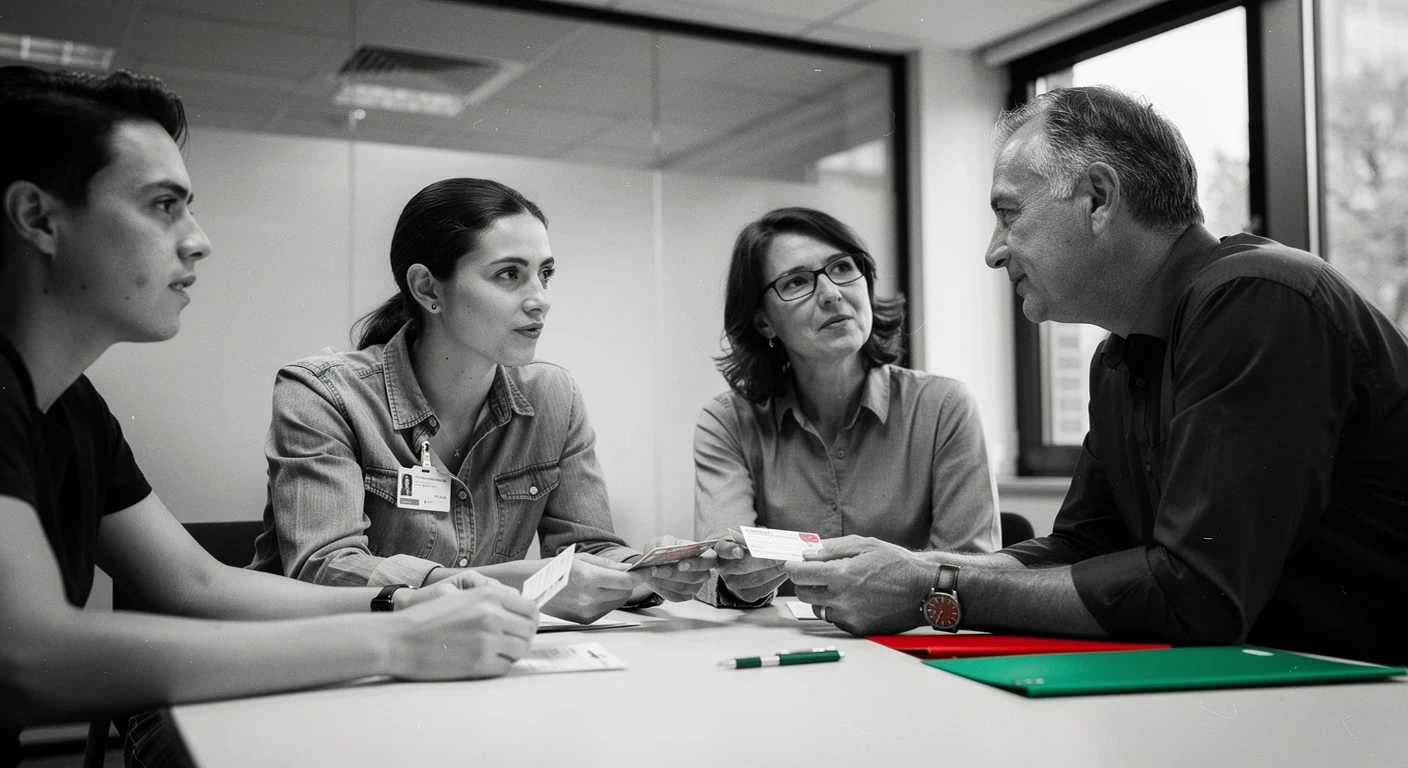
Point cle : Use DISC as a decision aid, not as a verdict. One profile tells you how someone may act under pressure. It does not tell you everything.
In a structured hiring process, DISC works best when it sits beside the Big Five, cognitive ability, and role-specific tests. That is the point. One result is fragile. A battery is stronger. SIGMUND offers more than 52 scientifically validated tests, so you can compare behavior, reasoning, and role readiness in one place. That gives the CEO and the DRH a cleaner view. It also reduces guesswork in the interview room.
What should you do with the graph? Start with the two dominant dimensions. Then ask one simple question: does this style support the real work? A high-D profile may move fast. Good. But does the role reward speed, direct feedback, and tough calls? A high-S profile may bring steadiness. Good. But does the role need rapid change, visible influence, and constant outreach? The answer should guide the shortlist.
- Use DISC to prepare interview probes.
- Use it to predict communication friction.
- Use it to plan onboarding support.
- Use it to compare a profile with the benchmark for the role.
For HR teams in the UK and the US, a structured method also helps with fairness. The EEOC expects assessments to stay job related and consistent. That matters. A colorful chart is not enough. You need evidence, scoring logic, and a direct link to the work. If a test cannot explain its scoring and its use, why should you trust it?
Which DISC test should you choose?
The market is full of free DISC tools. Some are fine for self-reflection. Some are weak. A few are worth using in a professional process. The difference is not only the price. It is the method. Does the tool show the questions? Does it explain validity? Does it give immediate results? Does it protect the candidate experience? Those details matter when you want reliable data, not random noise.
123test offers a free 16-item DISC test with results in 3 to 5 minutes. IDRlabs uses a 16-question open DISC test and reports an alpha of Cronbach of 0.87. Truity also uses 16 questions and says its professional sample shows an alpha of Cronbach of at least 0.85, while the full report costs 59 dollars. OpenPsychometrics provides an open assessment path that is useful for transparent review. The numbers are useful. They help you benchmark the tools.
- Speed: Can the candidate finish it in a short session?
- Evidence: Is reliability stated in plain language?
- Result depth: Do you get a simple chart or a usable report?
- Role use: Can the output support coaching, onboarding, and selection?
- Data handling: Does the vendor explain privacy and retention?
Attention : Free does not mean fit for purpose. A tool can be free and still be too shallow for hiring decisions. Use it only if it supports a structured review.
According to SHRM, hiring tools should support consistent selection practices and clear job criteria. That is the practical filter. Choose a test because it helps you make better decisions, not because it looks simple. If the result cannot help you compare candidates against the same role standard, why use it at all?
For a deeper stack, pair DISC with the SIGMUND personality test and SIGMUND HR assessments. That gives you one more layer of evidence. It also helps you avoid the classic mistake of hiring a style instead of a performer.
What are the common mistakes with DISC?
The first mistake is overreading the chart. A person with a strong D score is not a bully. A person with a strong S score is not passive. A person is more than a label. The second mistake is using DISC alone. That is lazy. The third mistake is ignoring role context. A sales role and an operations role do not need the same behavior mix. That should be obvious, yet many teams still skip it.
The fourth mistake is weak interpretation. If the report says “use direct communication,” what does that mean on Monday morning? It may mean shorter feedback. It may mean clearer targets. It may mean fewer status meetings. The fifth mistake is no follow-through. If you do not use the results in onboarding, team building, and coaching, the assessment becomes a nice PDF. Nice PDFs do not change performance.
Point cle : DISC is useful when it changes a real action. Otherwise, it is decoration.
- Avoid treating one profile as a permanent identity.
- Avoid hiring on charm alone.
- Avoid using the same interview style for every profile.
- Avoid keeping results out of onboarding plans.
- Avoid ignoring privacy rules and internal governance.
The UK ICO is clear on data minimization and transparency. Only collect what you need. Tell people why you collect it. Keep it secure. That matters when personality data enters the workflow. The UK ICO guidance is a strong reminder that assessment data is still personal data. Treat it with care.
How does DISC improve team building and leadership?
DISC is not only for selection. It is also useful after the hire. That is where many teams get real value. When managers know the profile mix, they can adjust communication. They can change the level of detail, the pace of decisions, and the way feedback lands. A direct profile may want short calls. A cautious profile may want facts first. A steady profile may want time to process. A dominant profile may want a decision now.
This is where the ROI becomes visible. Fewer misunderstandings. Faster onboarding. Better coaching. More useful feedback. One practical example: a new hire with a high-I score may perform well in client-facing work, but only if the manager gives room to speak and connect. Another example: a high-C profile may excel in compliance-heavy work, but only if the process is clear. That is not theory. That is daily work.
A team does not need identical people. It needs people who know how to work together on purpose.
Use the profile data in three ways. First, map the team. Second, set communication rules. Third, link each style to the work rhythm. This is simple, and that is why it works. If you want more than a single report, explore the SIGMUND test catalogue. You will find a broader set of tools for hiring, coaching, and leadership use.
Research on structured selection has long shown that combining tools improves decision quality. A psychometric assessment is strongest when it sits inside a clear process, not outside it. That is the real advantage of a platform built for HR decisions.
What should HR do next after a DISC report?
Do not let the report sit in a file. Turn it into action. Start with the role. Then compare the result with the behavior the role needs. Then translate that into interview prompts, onboarding notes, and manager coaching. This keeps the process practical. It also helps the candidate experience, because the person sees that the result is being used thoughtfully, not mechanically.
Here is a simple workflow. Share the report with the hiring panel only if the process allows it. Compare the dominant styles across the shortlist. Decide what each candidate would need in the first 30 days. Put that into the onboarding plan. Review the result again at 90 days. This is where the data earns its keep. If you do not revisit it, you lose the value.
- Read the two dominant DISC dimensions.
- Link them to one role requirement.
- Write one interview question from the result.
- Set one onboarding action for the manager.
- Track one KPI after 30 and 90 days.
For validation, keep a second source beside DISC. Use cognitive ability when the role needs problem solving. Use verbal reasoning when communication is critical. Use numerical reasoning when the job is data heavy. That is where SIGMUND adds value. It gives you a structured battery, not a single lens. And that is what strong hiring needs.
Ready to transform your hiring process?
Discover SIGMUND assessment tests — objective, science-based, immediately actionable.
Discover the testsFrequently Asked Questions
A free DISC test is a behavioral assessment that measures four workplace styles: Dominance, Influence, Steadiness, and Conscientiousness. It helps you understand how someone communicates, decides, and responds to pressure. It is not a diagnosis, but a practical profile for work behavior.
DISC helps hiring teams predict communication style, pace, and likely reactions under stress. It can reduce poor-fit hires by showing whether a candidate matches the role’s demands. Used with interviews and skills tests, it adds useful context without replacing other evidence.
Managers use DISC to improve communication, reduce friction, and assign work more effectively. A team member with high Influence may energize clients, while high Steadiness may stabilize the group. Understanding these differences can improve collaboration, feedback, and performance across the team.
A free DISC test usually takes about 10 minutes to complete. Most versions use short behavioral questions and give immediate results. That makes it fast enough for hiring, onboarding, and self-awareness, while still providing a clear snapshot of workplace style.
DISC focuses on observable behavior at work, while the Big Five measures broader personality traits such as openness and conscientiousness. DISC is easier to apply in management and hiring conversations, but the Big Five often gives a wider psychological view of a person.
Use DISC as a decision aid, not as a verdict. Combine it with structured interviews, cognitive ability tests, and role-specific assessments. One profile shows likely behavior under pressure, but a stronger hiring decision comes from multiple validated data points together.
Assess Your Mastery of DISC in Hiring and Team Leadership
Can you use behavioral profiles to make sharper hiring decisions, improve onboarding, and reduce team friction?
10 questions · ~2 minutes
📚 Related articles
Explore the SIGMUND Test Catalog
Discover our comprehensive range of scientifically validated psychometric tests